Car Won’t Start Sounds Like A Drill: Causes & Fixes

A “drill” sound from the engine bay when you turn the key usually means the starter system is trying to engage but struggling. Common causes include a weak battery, loose or corroded connections, a failing starter, or mechanical interference that makes the starter grind.
Match the exact sound pattern before replacing anything:
- Rapid clicking or a rough, struggling crank: Check the battery, terminals, and ground connections first.
- Loud grinding or a harsh mechanical rasp: Stop cranking. The starter gear, ring gear, or flexplate may be misengaging.
- Intermittent drill-like noise: Suspect voltage drop, heat-soak problems, or a worn starter gear.
- Smooth cranking with no engine start: The problem may be fuel or ignition rather than the starting system.
If you hear grinding, stop after 5-10 seconds of total cranking. Repeated attempts can damage the starter gear and ring gear or flexplate.
Key Takeaways
- Match the sound. Grinding and drill-like noises point to starter engagement problems or mechanical interference.
- Stop early. If you hear grinding, stop cranking after 5-10 seconds to avoid gear damage.
- Start with basics. Check battery voltage and terminal tightness before replacing parts.
- Clean and tighten. Corrosion or a loose ground cable can cause clicking, weak cranks, and drill-like noises.
- Watch the cranking speed. A major change after a jump points toward the battery or cables.
- Tow when unsure. Repeated drill or grind noises, or no improvement after jump attempts, mean it is time to stop DIY testing.
What a Drill-Like Starting Noise Means
A drill-like noise usually comes from the starter area: the starter motor, solenoid, starter gear, or the ring gear it engages. The starter should pull its gear into position and turn the engine smoothly. When the gear only partly engages, slips, or meets resistance, the result can sound like drilling, rattling, or grinding.
The description usually refers to one of two problems. Rapid clicking or a rough, struggling crank is generally electrical: the starter circuit is losing voltage as it tries to draw current. Grinding or a harsh mechanical rasp usually means the starter gear is engaging incorrectly, or the ring gear cannot turn freely.
If the engine cranks smoothly but never catches, look beyond the starter at fuel, ignition, or engine-management problems. If the sound is loud, rough, or clearly coming from the starter, diagnose the starting system first.
How to Tell the Difference
A starter that sounds like it is “drilling” while the engine cranks may have a misaligned starter gear, a failing solenoid, or a damaged ring gear. The starter engages through the solenoid and then spins the engine. If the gear catches at the wrong moment, rides only partly into position, or meets damaged teeth, it produces a repetitive drill or grinding sound.
Listen for what changes between attempts:
- If the sound is strongest the moment the starter engages and then briefly shifts, suspect the starter drive or solenoid.
- If the sound remains the same on every attempt and the crank sounds crunchy rather than smooth, suspect the ring gear or flexplate, which is used on many automatic transmissions.
- If the noise gets worse as the battery loses charge, a weak electrical supply may be making the starter behave erratically.
- If the noise stays mechanical even after a strong jump, stop cranking. Mechanical interference or damaged gear teeth may be involved.
Before removing parts, gently check whether the battery terminals move and inspect the main engine ground cable for looseness. Do not force or twist the cables aggressively while the battery is connected.
Stop if the Noise Is Grinding
A smooth whir is normal. Grinding means the gears may be rubbing instead of engaging cleanly. Each additional attempt can remove metal from the starter gear, ring gear, or flexplate teeth.
If the engine does not start and the grinding is loud, stop after 5-10 seconds of total cranking. A problem that began as a starter or connection issue can become an expensive gear replacement if you keep cranking.
Rapid Clicking That Sounds Like a Drill
Rapid clicking usually means the starter circuit is trying to draw current, but battery voltage collapses. The solenoid energizes, drops out, and repeats the cycle. The resulting fast “clack-clack-clack” can sound like a drill.
A battery can look fine and still fail under load, particularly when it is cold, older, or has a weak cell. If you have a multimeter, test it directly. If you do not, a proper jump and careful observation can still narrow the problem down.
- Turn on the headlights. If they dim sharply when you try to start the car, the battery may not be able to supply enough current.
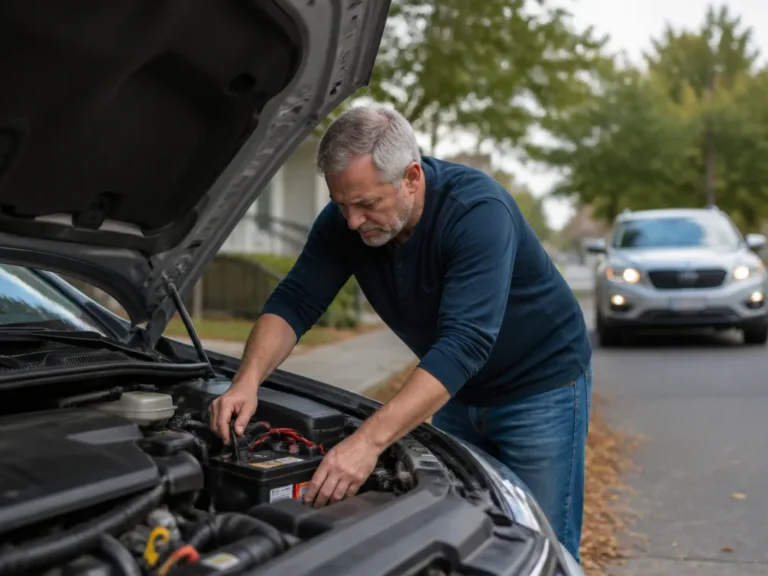
- Inspect both battery terminals. Look for loose clamps and white or green corrosion.
- Check the main engine ground. A loose or corroded ground can cause clicking and weak, erratic starter behavior even with a relatively new battery.
- Try a proper jump. If the sound changes to a stronger, smoother crank, the battery or cable resistance is the leading suspect.
If a jump barely changes the noise, suspect the starter circuit, solenoid, or relay. A mechanical problem that the starter cannot overcome is also possible if the noise is rough rather than a clean series of clicks.
Loose Connections Can Mimic a Dead Battery
Rapid clicking can occur with a reasonably charged battery when the terminals are loose or corroded. High current flowing through a bad connection creates voltage drop, heat, and intermittent contact. That combination can produce drill-like clicking even when the battery is not completely discharged.
Do not rely on the battery’s age or appearance alone. A load test or voltage-drop test may be needed to distinguish the battery from the cables.
Grinding Drill Noise
Grinding is the clearest warning sign. A drill-like grinding noise while cranking usually means metal-to-metal contact or failed starter engagement. The problem may involve the starter gear and ring gear, but a mechanical fault elsewhere can also make the starter strain.
Use the noise location and engine movement to narrow it down:
- Noise near the starter, battery, or solenoid wiring: Focus first on starter engagement, the starter drive, and the ring gear or flexplate.
- Noise deeper in the engine bay with little engine movement: Consider a severe mechanical problem, such as a timing belt or timing chain failure, internal seizure, or a seized accessory.
- Engine movement that stops quickly or feels unusually difficult: Stop cranking and arrange an inspection.
Timing belt or timing chain problems are less common than starter faults, but they can cause abnormal cranking. A timing belt issue may come with a history of belt age near the service interval. After an overnight rest, the engine may crank briefly and then fail, although timing failures can also produce no-crank or otherwise abnormal cranking symptoms.
If the grinding remains unchanged with a fully charged battery or quality jump pack, stop cranking. The starter may not be the only problem, and repeated engagement may be damaging the ring gear or flexplate.
When to Stop Immediately
Stop after 5-10 seconds of total cranking if:
- The sound is loud grinding.
- The engine does not start.
- The starter appears to spin without turning the engine.
- The engine barely moves or seems to bind.
- The noise does not improve with a strong jump.
Repeated grinding can chew up the starter gear and the ring gear or flexplate, turning a manageable starting-system repair into a more expensive mechanical job.
Why the Drill Noise Comes and Goes
Intermittent drill-like behavior usually means the fault appears under a particular condition. Battery and cable problems, heat-soak issues, and mechanical stiffness can all change how the starter behaves after the car rests.
A weak battery may recover slightly after sitting as its surface charge evens out and its internal resistance changes temporarily. The next start attempt can still pull the voltage down under load, causing the solenoid to engage and disengage rapidly. That cycle may sound like drilling.
Heat-soak problems affect the starter and solenoid after the vehicle has been driven and then parked briefly. Some failures appear only when those components are hot. Others are more noticeable in cold weather, when battery capacity falls and cable resistance becomes more significant.
Mechanical binding has a different pattern. The engine may crank normally during one attempt and then produce a rough or grinding rasp later. If the sound changes from smooth cranking to mechanical grinding regardless of temperature, treat it as a starter gear or engagement problem until a technician rules that out.
Use the conditions as a diagnostic shortcut:
- Worse when cold: Focus first on battery capacity and cable resistance.
- Worse after heat soak: Focus on the starter, solenoid, and connections under heat.
- Unpredictable at any temperature: Suspect mechanical engagement trouble or failing starter components.
Test the Starting System Without Replacing Parts
Basic observations and a few tools can separate a weak electrical supply from a starter or engine problem. The goal is to find out whether the starter is receiving enough current and whether the engine can rotate freely.
A multimeter can add useful information:
- Measure battery voltage with the key off.
- Measure voltage while someone cranks the engine.
- If voltage drops substantially while cranking, the battery or cables are failing under load.
A voltage reading at rest cannot prove that the battery is healthy. The battery must be able to maintain voltage while the starter demands high current.
Check Whether the Engine Can Rotate
If the engine is seized, no starting-system test will solve the problem. On some vehicles, you can check whether the engine turns by putting a socket and breaker bar on the crank pulley bolt. Do this only if you know how to access the pulley safely and understand the risks around belts, fans, and other moving parts.
For most drivers, electrical checks are the safer choice. If grinding appears or the engine does not seem to turn normally, stop cranking and arrange a professional inspection rather than repeatedly testing it.
If the Tests Suggest Mechanical Damage
Grinding combined with abnormal engine movement is a reason to stop DIY attempts. Repeated cranking increases the chance of damaging the starter gear, ring gear, or flexplate. A shop can inspect starter engagement and determine whether the engine, timing system, or an accessory is preventing normal rotation.
When to Tow the Car
Tow the car when the noise suggests gear damage, when a strong jump does not change the symptom, or when you cannot identify a safe and simple connection problem. Repeated grinding is the clearest stop signal because each attempt can damage the starter gear and ring gear or flexplate.
Tow it if any of these conditions apply:
- Grinding persists after a strong jump.
- Weak cranking and repeated clicking continue, and you cannot isolate the electrical fault.
- The car will not crank at all, and you cannot identify a safe fix such as a loose terminal.
- You smell burning near the battery, starter, or wiring after an attempt.
- You see sparks, heavy corrosion, or a hot battery terminal.
- The engine cranks abnormally or seems mechanically stuck.
Battery fumes and high-current mistakes can cause injury or damage. Back away if cables heat up, wiring smokes, or sparks continue, and have the vehicle handled by someone equipped to test the battery and starter circuit.
Tell the tow driver that the car has a “starter grinding / drill-like noise.” Mention whether a jump changed the sound and whether the problem appears when the engine is cold or hot. That information helps the shop prioritize the starter, ring gear or flexplate, battery under load, and main grounds before replacing parts blindly.
FAQ
Why does my car sound like a drill when I try to start it?
A grinding or drill-like sound usually comes from the starter gear and ring gear rubbing during engagement, or from the starter struggling under electrical load. If the noise is loud and continues while cranking, stop after 5-10 seconds of total cranking. A strong jump that does not improve the sound points away from a simple discharged battery.
Can a bad battery cause a drill sound when cranking?
Yes. A weak battery can make the starter circuit energize and drop out repeatedly, creating fast clicking and a rough drilling sound. Severe headlight dimming during cranking or improved cranking after a jump supports this diagnosis.
How long should I keep trying to start a car that is grinding?
Stop after 5-10 seconds total of grinding attempts. If the sound returns on the next attempt, stop cranking entirely and get help. Continued grinding can wear the starter gear and the ring gear or flexplate.
What is the fastest safe test I can do at home?
Check the battery terminals for tightness and corrosion, then try a proper jump while listening for a change in cranking sound. If you have a multimeter, measure battery voltage at rest and during cranking to see whether it collapses under load. If the noise is grinding and does not improve, do not keep testing with repeated starts.
Is it better to replace the starter or tow the car?
If grinding persists with a strong jump, tow the car. The problem may involve ring gear or flexplate damage, starter engagement, or a mechanical fault. If rapid clicking improves after a jump and terminal cleanup, the starter is less likely to be the cause. When there is a risk of gear damage, towing is safer than guessing.

- 10 Best Jack For F250 Super Duty Review (October 2026) - October 12, 2026
- 10 Best Jack For Flat Tire Review (October 2026) - October 12, 2026
- 10 Best Jack For Ford Transit Review (October 2026) - October 12, 2026