Car Alarm Goes Off When I Reconnect Battery: 5 Steps To Fix

Reconnecting a car battery can trigger the alarm because the alarm control module loses power, restarts, and re-checks inputs such as the doors, hood, trunk, motion sensors, and tilt sensors. If one of those circuits reads “open” during the reboot – even briefly – the system may interpret it as an attempted break-in.
A door can look closed while its latch switch still reports “open.” A worn or misadjusted hood switch can do the same. The vehicle may also rock slightly while you reconnect the cable, giving a motion or tilt sensor a reason to trigger. If the siren starts immediately after reconnection, the alarm is usually reacting to a power-reset condition rather than detecting an actual intrusion.
Key Takeaways
- Power loss resets the alarm module and makes it re-check protected switches.
- Door and hood switches can misread “open” during reconnection.
- Motion and tilt sensors may trigger if the car rocks or you move near it.
- Relearn and arming timing can cause a brief false alarm after power returns.
- The safest temporary silence method uses the vehicle’s disarm procedure, not pulled fuses.
- A careful reconnect routine reduces voltage dips, movement, and sensor glitches.
Why a Car Alarm Sounds When You Reconnect the Battery
The alarm’s startup checks can expose a door or hood circuit that is already reporting an active state.
That can happen even when you reconnect the battery correctly. A door may appear fully shut while the latch switch remains partly open. A hood switch may be dirty, worn, or out of adjustment. When the alarm module powers up and sees an active input, it can sound the siren immediately.
Voltage changes and sensor wake-up can add to the problem. When power returns, the alarm module, body controls, radio, HVAC controls, and interior lights may all wake at once. If the vehicle moves slightly during that window, a motion or tilt sensor may treat the movement as an intrusion.
What Triggers the Alarm During a Power Reset
Battery reconnection usually exposes one of two types of alarm triggers: an input-state problem or a movement-state problem.
An input-state trigger occurs when the alarm module sees a protected circuit as open while it initializes. Door jamb switches, hood latch switches, and sometimes trunk circuits are common sources. A switch may be stuck, worn, dirty, poorly adjusted, or not fully engaged by the latch.
A movement-state trigger occurs when a motion or tilt sensor detects the vehicle rocking or changing angle. Bumping the car, leaning on a fender, closing a door hard, or shifting the hood while reconnecting the battery can be enough to set off a sensitive aftermarket system.
Common triggers include:

- A door latch switch reports “open” during alarm initialization.
- A hood switch reports “open” or works intermittently.
- A motion or tilt sensor detects movement during startup.
- The alarm arms immediately after power returns instead of allowing a grace period.
- The battery cable makes poor contact and creates a momentary voltage or connection fault.
How Key-Off, Door, and Hood Signals Affect the Alarm
Turning the key off only stops the engine and ignition circuits. It does not tell an armed alarm that the vehicle is secure. The alarm can still monitor the doors, hood, trunk, and sensors after the key is removed.
Door-related problems usually involve the door jamb switch or latch alignment. A door can close far enough to look normal but fail to push the switch fully into its closed position. That matters during reconnection because the alarm module checks the switch quickly instead of waiting for the vehicle to settle.
Hood switches cause frequent false alarms because hood latches collect dirt, switches wear, and adjustments change over time. If the switch reports “open” when the hood is latched, the alarm can interpret battery reconnection as an attempted hood entry.
Use the timing and behavior as clues:
- The alarm sounds instantly: Suspect a hood or door switch, or an alarm setting that arms immediately when power returns.
- The alarm sounds after you move or bump the car: Suspect a motion or tilt sensor.
- The alarm sounds when one particular door or the hood is touched: Suspect that component’s switch or wiring.
- The alarm behaves inconsistently after a poor cable connection: Check the terminals and cable contact before chasing sensors.
How to Diagnose the Battery-Reconnect Trigger
which input is reading “open,” and what changed while the system was starting up?
First, note the timing. If the siren starts within seconds of reconnection, a door or hood input is more likely. If it starts after you move the car, lean on it, or open something, motion sensing or an arming delay is more likely.
Check the physical latch signals next. Close each door firmly and verify that the dome light turns off as expected. Check the door warning indicator or dashboard message, if the vehicle has one. A dome light that flickers or stays on points to the same type of switch mismatch that can trigger an alarm during power restoration.
Then check the hood circuit. With the hood fully latched, look for a hood-open warning or inconsistent dashboard message. A hood switch can be unreliable even if it has not been touched during the battery work.
Finally, repeat the reconnect without moving the vehicle. Keep your hands off the hood and fenders, avoid leaning against the car, and keep the area still while the alarm initializes. If the alarm stays quiet only when the vehicle does not move, inspect the motion or tilt sensor.
Use this isolation process:
- Reconnect and watch the timing – note whether the alarm triggers immediately or after movement.
- Verify every door’s closed signal – check the dome light and door warning.
- Check the hood-latch indication – confirm that no hood-open message appears when the hood is latched.
- Reconnect without moving the car – do not bump, lean on, or rock the vehicle.
- Repeat once with the hood fully latched – a second consistent result helps separate a switch problem from a movement trigger.
Aftermarket alarms may use separate wiring for the hood and doors, so their symptoms can differ from the factory system. The same diagnostic logic still applies, but you may need the alarm’s wiring diagram to identify which wire connects to each switch.
How to Silence the Alarm Without Disabling Security
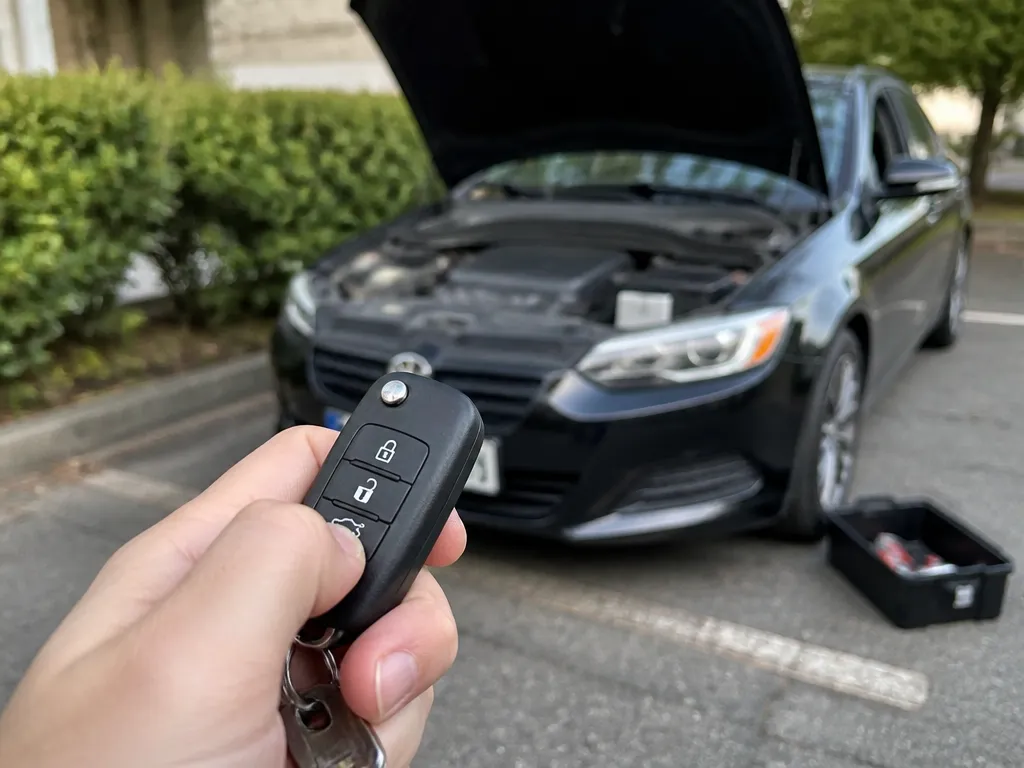
Use the vehicle’s built-in disarm procedure before reconnecting the battery. In many cars, pressing the unlock button on the key fob disarms the system. Some alarms use a specific lock-and-unlock sequence, so follow the normal procedure for that vehicle rather than improvising.
Avoid pulling fuses, cutting wires, or disconnecting the alarm module as a first response. Those shortcuts can leave the system in an error state, create additional wiring faults, or make the next power-up less predictable.
If you need to disconnect and reconnect the battery more than once, use the same routine each time:
- Disarm the alarm with the key fob before reconnecting.
- Keep the doors and hood fully latched.
- Reconnect the battery carefully.
- Stop touching or moving the vehicle while the system stabilizes.
If the alarm continues sounding after you disarm it, record the pattern. Note whether it points to a door, hood, or motion trigger. Repeated siren cycles can drain the battery quickly, so do not keep reconnecting the battery without addressing the likely fault.
How to Reconnect the Battery and Avoid Another Alarm
A careful reconnect limits voltage dips, accidental movement, and poor terminal contact while the alarm module restarts.
Before touching the terminals, remove the key from the ignition and prepare the work area. Keep the hood and doors fully latched, and confirm that the interior light behaves normally.
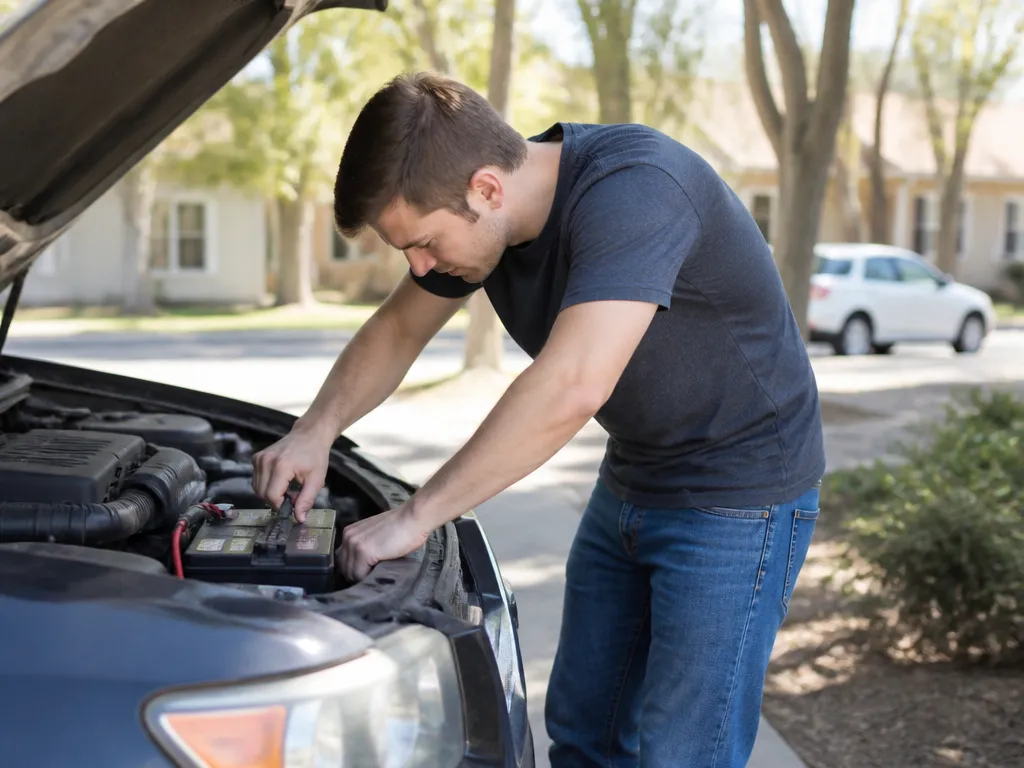
Reconnect the cables carefully to prevent accidental contact or tool slips. Battery terminals can spark when a connection is made, so use insulated tools if available. Connect the positive cable to the positive terminal and the negative cable to the negative terminal. Reversed polarity or a loose connection can create a fault state, damage electrical components, or make the alarm behave erratically.
Once the cable is fully connected, stop touching the car and let the system settle for a few seconds. Do not open a door, move the hood, or shift the vehicle during that initial power-up check.
A reliable reconnect routine is:
- Keep the hood closed and doors shut, and confirm the dome light is off.
- Connect the terminals carefully, using the correct polarity and avoiding tool slips.
- Wait a few seconds with the vehicle completely still.
- Continue with testing or starting the vehicle only after the system has stabilized.
If the alarm still fires after several careful reconnects, the problem is more likely a faulty or misadjusted switch or sensor than the reconnect technique itself.
How to Check the Alarm After Power Returns
After the battery is connected, confirm that the vehicle starts normally and that the alarm responds correctly to ordinary commands.
Cycle the locks with the key fob and check that the doors lock and unlock normally. Watch for hood or door warning indicators. A faulty hood or door switch may produce warnings or inconsistent behavior even when the vehicle appears secure.
Next, lock the vehicle and leave it untouched. If the alarm sounds while the car remains still, the system is probably seeing a persistent fault in a door or hood circuit, a motion sensor, or the related wiring.
Once the system remains stable, test one input deliberately. Open a door while the alarm is armed to confirm that it responds as expected. Close the door fully and check that normal armed behavior returns.
Aftermarket alarms may have adjustable sensitivity or separate interior-motion settings. If the physical switches work correctly, reduce the sensitivity or temporarily disable interior motion using the alarm’s controls. Do not cut or unplug sensor wiring unless the manufacturer’s instructions specifically call for it.
FAQ
Why does my car alarm go off when I reconnect the battery?
A faulty door jamb switch, hood latch switch, motion sensor, or tilt sensor can report an active state during startup, causing the alarm to interpret the condition as an intrusion.
Can I stop the alarm without removing fuses or wires?
Use the vehicle’s normal alarm controls rather than removing fuses or wires. Keep the doors and hood fully latched so their circuits read “closed.”
Will reconnecting the battery drain it if the siren keeps sounding?
It can. A siren that runs repeatedly draws current and can worsen an already low battery. If the alarm starts triggering, stop repeating the reconnect and check the hood switch, door switches, and vehicle movement instead.
How long should I wait after reconnecting the battery before touching anything?
Wait a few seconds while the vehicle’s alarm and body-control modules complete their initial checks. Opening a door, moving the hood, or bumping the vehicle during that short startup window can create a false trigger.
What is the most common mistake during a battery reconnect?
A common mistake is leaning on the vehicle, closing a door loosely, or reconnecting while a hood or door switch is not fully engaged. A latch can look closed while the switch still reports “open.” Confirm the dome light and hood or door indicators match the physical state before reconnecting.

- Top 10 Best Helmet For Xtreme 125r 2026 - October 5, 2026
- Top 10 Best Helmet For Xpulse 200 2026 - October 5, 2026
- Top 10 Best Helmet For Xsr 155 2026 - October 5, 2026