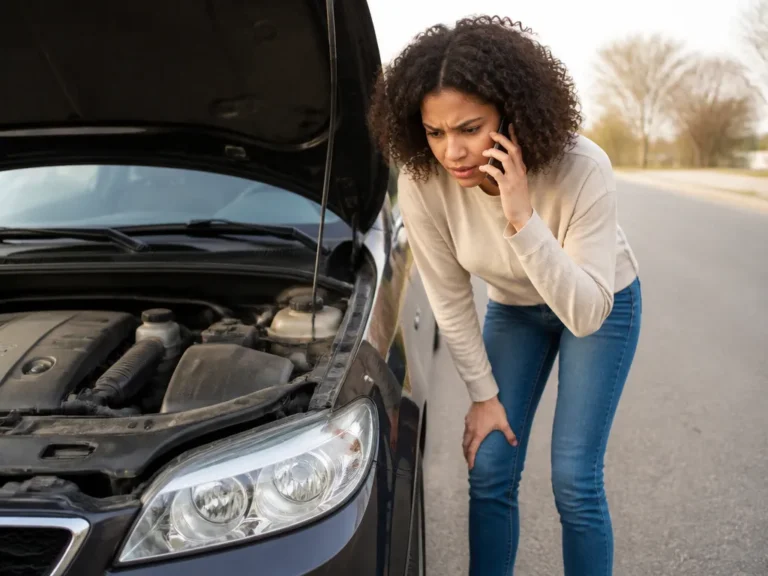
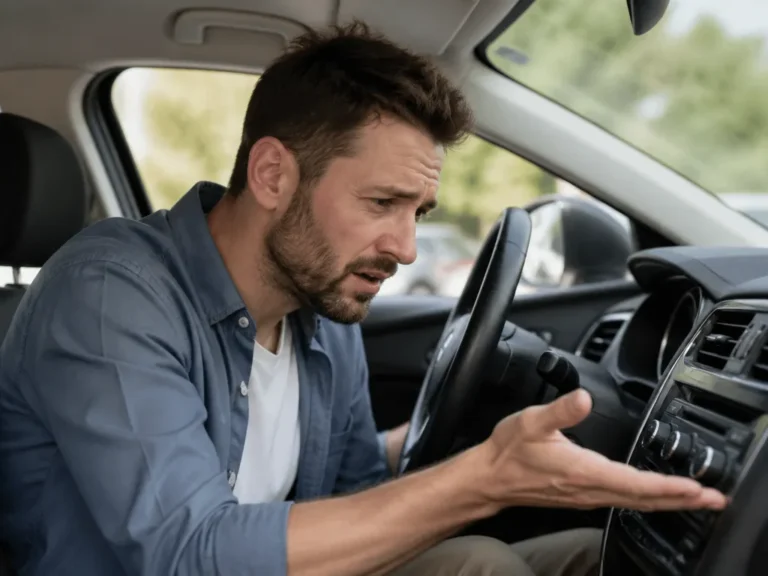
Car Won’t Start Wait 10 Minutes And It Starts: Car Won’t Start

A car that will not start, then starts after 10 minutes, usually has a timing-related fault rather than a mysterious one. A component may lose pressure, voltage, or signal, then recover after it cools, re-primes, or resets. The quickest clues come from how the engine behaves during the failed attempt.
Check whether it cranks strongly, cranks slowly, or does not crank at all. Start with the battery and starter, then check fuel delivery and crank-sensor signals. If you smell fuel, see smoke, notice overheating, or get repeated no-crank symptoms, stop testing and call for roadside or professional help.
The quickest clues
- Put safety first. If you smell fuel or see smoke, stop testing and call for roadside help.
- A wait can reset a system. A control module may recover after cooling or restarting, while fuel pressure may rebuild.
- A weak battery causes slow cranking. If the lights dim or the engine turns slowly, charge-test the battery before replacing parts.
- Fuel pressure loss causes normal cranking with no start. A failing pump, regulator, check valve, or fuel leak can fit this pattern.
- A crank sensor can recover after cooling. A borderline sensor may work again after 10 minutes.
- Heat can interrupt fuel delivery. Starting trouble after hard driving or hot weather may point to vapor lock or heat soak.
Car Won’t Start Then Starts After 10 Minutes
A car that starts only after a pause usually has a component that loses pressure or power and then recovers, or a system that enters a fault state and resets. Battery voltage drop, a failing fuel-pump check valve, and a crank or ignition sensor affected by temperature are common possibilities. Whether the engine turns over and whether it sounds as if it is trying to run will determine your next test.
What changes during the 10-minute wait
The pause gives heat-soaked components time to cool, lets fuel pressure change, and allows electrical modules to reset. Treat the delay as a clue about which system becomes unstable after shutdown or during the failed start.
Heat affects electrical contacts, sensors, fuel lines, and engine-bay wiring. Fuel in the rail or lines can cool and change the amount of vapor in the system. If fuel pressure leaks back toward the tank through a weak check valve or another fault, the first restart attempt may not have enough pressure. A later attempt may work after the pump rebuilds pressure or the leak temporarily seals.
Electrical modules can also recover after voltage stabilizes. A borderline battery may regain some voltage after resting, reducing the voltage drop during the next crank. That does not repair the battery; it only makes the next attempt more likely to succeed and can delay the diagnosis.
Battery and starter symptoms behind the delay
A weak battery or failing starter can produce this pattern. The battery may sag under load during the first attempt, leaving too little voltage for the starter relay, ignition system, or engine control module. After 10 minutes, the battery’s internal chemistry may recover enough to reduce the voltage drop.
Listen and watch during the failed attempt:
- Dim dash or headlights, slow cranking, or a labored engine turn: suspect the battery first.
- A quick, strong crank with no start: move away from the starter and investigate fuel or ignition.
- A grinding starter sound: suspect a worn starter drive or solenoid, although low voltage and poor connections can contribute.
- Repeated clicking with no crank: check the battery, terminals, ground straps, starter relay, and solenoid.
If you have remote start, compare it with a normal key or push-button start. A remote-start failure followed by a successful normal start can still point to voltage loss, wiring resistance, or a sensor that responds differently to the starting command.
Use this repair order:
- Charge-test the battery. A surface-charge reading can look healthy, so use a real load test if possible.
- Check and clean the battery terminals. Loose or corroded connections can cause intermittent voltage loss.
- Inspect the engine ground straps. A poor ground can create symptoms that change as components cool or move.
- Test starter current and solenoid operation if the battery passes. A worn starter can draw excessive current and behave differently with temperature.
Stop and get help if you see repeated sparks at the battery, heavy terminal corrosion, or repeated clicking with no crank. A serious electrical fault or failing battery could leave you stranded again.
Fuel delivery problems that improve after sitting
When the engine cranks normally but will not start, fuel delivery moves to the top of the list. Fuel pressure may drop after shutdown, the pump may take time to re-prime, or a leak or check valve may seal better after the components cool.
Turn the key to the ON position and listen for a brief fuel-pump hum from the tank area. If the pump primes but the first start fails, it may be weak, slow to build pressure, or losing pressure between attempts. A second attempt after 10 minutes that starts more easily points toward pressure retention or pump delivery rather than a purely electrical lockout.
A first start followed by an immediate stall can also indicate inconsistent fuel pressure. A raw-fuel smell points to a different and more urgent problem, such as a fuel leak, stuck injector, or evaporative-emissions or fuel-system fault. Stop testing if you smell fuel.
Common fuel-system causes include:
- A weak fuel pump that struggles to build pressure when hot or when voltage is slightly low.
- A failing fuel-pump check valve that lets pressure bleed back to the tank.
- A leaking fuel-pressure regulator on systems that use one, or a related return-system fault.
- A clogged filter or other restriction that changes temporarily with temperature or pressure.
Use this repair order:
- Scan for stored diagnostic trouble codes (DTCs) if you have a scan tool. Even a basic scan can point toward fuel pressure, low fuel flow, or immobilizer problems.
- Verify fuel pressure if you have the equipment. Compare the pressure during prime with the pressure after the 10-minute wait.
- Inspect the fuel-pump module and connectors only if you can reach them safely.
- Replace a component after pressure testing confirms the fault. Guessing at pumps, regulators, and injectors gets expensive quickly.
Stop and seek expert help if you find a fuel leak, repeatedly smell strong fuel, or cannot access the fuel system safely. Fuel-system testing is not worth turning into a fire hazard.
Ignition and crank-sensor faults that recover after cooling
If the starter turns the engine strongly but it will not fire, check ignition timing and crankshaft position signals. A crankshaft sensor, camshaft sensor, or ignition-control component can fail intermittently when hot and work again after cooling for 10 minutes.
The engine control module needs a reliable crank-position signal to control ignition and fuel delivery. If the signal becomes weak or disappears, the engine may crank without starting. After the sensor cools, its output may stabilize enough for the module to accept it again.
Check for a Check Engine warning and scan for stored codes even if no warning light is visible. Faults may relate to crankshaft or camshaft correlation, signal range or performance, or misfires.
Use this repair order:
- Scan for codes related to the crankshaft, camshaft, misfire, or ignition system.
- Inspect sensor connectors and wiring for looseness, corrosion, oil contamination, or rubbed-through insulation.
- Test the sensor signal with the right equipment. A multimeter may miss an intermittent waveform problem that an oscilloscope can identify.
- Replace the suspect sensor after confirming the fault. Many no-start problems come from fuel delivery or battery voltage, so a sensor swap can waste money.
Do not crank continuously for long stretches. Extended cranking overheats the starter and can wash down the cylinders with fuel if the injectors are firing. Use short attempts, then stop and test.
Heat, vapor lock, and overheating
Heat can explain a delayed start, especially after hard driving, long idling in hot weather, or shutting the car off after the engine bay has become heat-soaked. Vapor bubbles can form in parts of the fuel system, reducing liquid fuel flow. Waiting allows the fuel to cool and condense, which can restore starting.
Heat can also affect sensors, electrical connectors, and engine-bay wiring. An overheating condition may cause the immediate no-start and create additional damage if you keep driving. Starting normally after 10 minutes does not mean the overheating problem has gone away.
Check the following:
- Recall any overheating warning before the starting problem began.
- Check whether the cooling fan operates when safe and without probing moving or hot parts.
- Look for heat damage near the battery, fuse box, and engine-harness connectors.
- Inspect underhood fuel lines for swelling or cracking if your car has accessible lines.
Stop and seek help if the temperature gauge was high, you saw steam, or the car smells like coolant. A cooling-system failure can cause serious engine damage even if the car starts again.
What to check during the next failed start
Use the next failure to collect a few useful facts, not to swap random parts. Compare the first failed attempt with the restart after 10 minutes, paying attention to crank speed, starting sounds, fuel-pump noise, and warning lights.
Follow this order:
- Check the basics. Confirm that the transmission is in Park or Neutral, press the brake, and make sure the key has good contact. With push-button start, confirm that the fob is present and its battery is not dead.
- Try one short start attempt. Note whether you get no crank, slow crank, or strong crank.
- Watch the dash and headlights. Lights that dim during cranking suggest voltage drop. Bright, stable lights make the battery less likely.
- Listen for the fuel-pump prime. Turn the ignition to ON and note whether the pump primes consistently. Some vehicles prime only briefly.
- Wait 10 minutes and try again. Note whether the engine starts faster, cranks at the same speed, or changes behavior.
- Scan for codes before clearing them. Stored codes can point toward crank sensors, fuel delivery, voltage, or the immobilizer.
Stop and seek expert help if:
- You smell fuel or see wetness near fuel lines or the engine bay.
- The engine cranks slowly despite a fully charged battery.
- The car has overheated or shows signs of coolant loss.
- The scan tool shows persistent crank or cam signal faults.
- The car still will not start after multiple short attempts.
Waiting 10 minutes can get you moving, but it should not become the long-term solution. Classify the symptom first, then test the battery, fuel system, or sensor circuit that matches it.
FAQ
Why does my car start after waiting 10 minutes?
The problem may be related to temperature or pressure. Fuel pressure can drop and take time to rebuild, or a crankshaft or camshaft sensor can produce a reliable signal again after cooling. Less commonly, a borderline battery can recover enough voltage during the pause to let the starter and engine control module work correctly.
How long should I try to crank before stopping?
Crank in short bursts of around 5-10 seconds, then pause to protect the starter. If the car does not start after a couple short attempts, stop diagnosing instead of cranking continuously for minutes.
Does this mean I need a new battery or starter?
Not automatically. Slow cranking and dimming lights make the battery the first suspect. Strong cranking with no ignition points more toward fuel delivery or a crank or cam sensor than a starter replacement.
Can I drive the car if it starts only after waiting?
You could get stranded or damage components if the cause is failing fuel delivery, an unstable sensor, or unreliable electrical power. Treat intermittent starting as unsafe to rely on for daily driving, and have the car diagnosed before taking a long trip.
What is the most common mistake with this symptom?
Repeating the “wait 10 minutes and try again” cycle without observing what happens during the first attempt.

- 10 Best Jack For F250 Super Duty Review (October 2026) - October 12, 2026
- 10 Best Jack For Flat Tire Review (October 2026) - October 12, 2026
- 10 Best Jack For Ford Transit Review (October 2026) - October 12, 2026