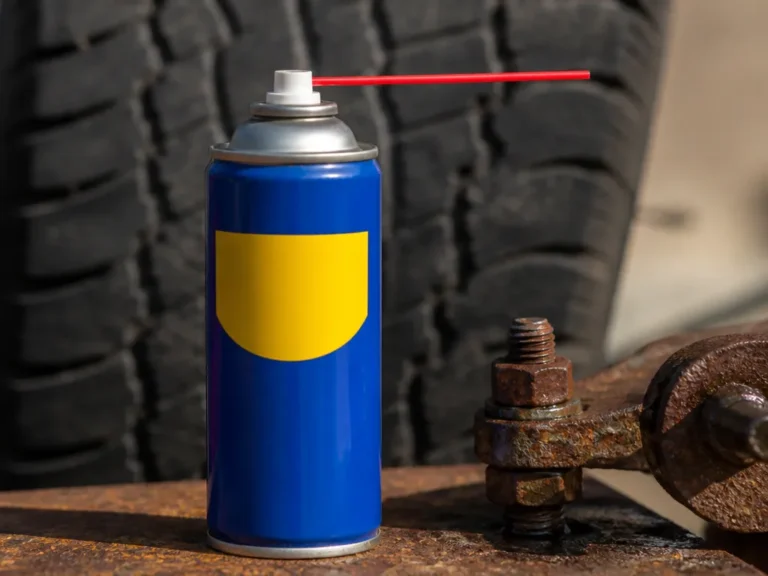
Is Penetrating Oil Better Than Wd-40?

Penetrating oil is better than WD-40 for stuck, rusted, or seized fasteners because it is designed to creep into tight gaps and break corrosion’s grip. WD-40 is better for displacing moisture, cleaning light grime, and providing brief, light lubrication. For a jammed bolt, apply penetrating oil, wait 10 to 30 minutes, then try loosening it with controlled force.
Key Takeaways
- Penetrating oil creeps into rusted threads and helps free seized fasteners.
- WD-40 displaces moisture more than it dissolves corrosion bonds.
- Penetrating oil is best for seized bolts, especially when you give it time to soak.
- WD-40 suits light jobs such as squeaks, dirt, and water protection.
- Wait before turning so the product can reach the rusted joint.
- Use basic safety precautions – ventilate the area, avoid sparks, and wipe excess oil away before applying heat.
![WD-40 Classic Product, Precision Pen On-The-Go, 0.3 FL OZ [3-Pack]](https://m.media-amazon.com/images/I/41Pxq+QkCRL._SL500_.jpg)
Helpful pick
WD-40 Classic Product, Precision Pen On-The-Go, 0.3 FL OZ [3-Pack]
These precision pens are great for applying small amounts of lubricant to tight, hard-to-reach spots.
When Penetrating Oil Beats WD-40
Penetrating oil is usually better than WD-40 when corrosion or mechanical binding is keeping a part from moving. That includes a stubborn lug nut, a frozen hinge bolt, or a rusted bicycle seatpost clamp. Penetrating oils are formulated to enter narrow gaps and separate metal surfaces that rust has effectively bonded together.
WD-40 is primarily a water-displacing lubricant, not a dedicated corrosion breaker. It can clean away grime, reduce friction briefly, and push moisture off a surface to slow further rust. If a fastener is already seized, WD-40 may loosen surface rust, but it often does not penetrate deep thread corrosion as effectively as a dedicated penetrating oil.
Match the product to the problem. Rust and seizure point toward penetrating oil. Water, light grit, and a wet squeak point toward WD-40.
What Each Product Can and Cannot Do
These products serve different stages of a repair. WD-40 can be useful first if the part is wet or dirty, while a dedicated penetrating oil can remain in the joint during the freeing work. You can then follow with penetrating oil for the actual freeing work. That two-step approach is often more effective than relying on one spray.
Neither product guarantees success on hardware that is heavily rusted through or effectively welded together by corrosion. You may need heat, mechanical leverage, a penetrating oil that includes corrosion inhibitors, or replacement hardware.
Many penetrating products are flammable, so treat them like solvents. Provide ventilation, keep them away from open flames, and avoid spraying where they can drip onto hot engine parts or exhaust components.
How to Use Penetrating Oil on a Stuck Fastener
Give penetrating oil time to work instead of spraying once and immediately reaching for a wrench. Spray the threads and any accessible joint, then wait long enough for the oil to migrate. A practical starting point is 10 to 30 minutes for moderately stuck hardware. Severe rust may require longer and repeated applications.
Spray directly into the seam and coat as much of the threaded area as you can. After the first dwell period, apply a second dose. The first application may drain away, get displaced by condensation, or loosen debris that blocks deeper penetration.
Wipe off heavy surface grime before applying the oil. Otherwise, you may trap dirt over the corrosion line instead of reaching it. Once the part moves, remove the residue and apply the correct lubricant for the job, such as light grease on bearings or a corrosion-resistant lubricant on fasteners.
![WD-40 Specialist Penetrant, New Bigger Can, 13.3 OZ [1-Pack]](https://m.media-amazon.com/images/I/31SXjUsquVL._SL500_.jpg)
Helpful pick
WD-40 Specialist Penetrant, New Bigger Can, 13.3 OZ [1-Pack]
A larger can of specialist penetrant provides plenty of coverage for deep soaking into stuck threads.
Why Penetrating Oil Works Better on Rust
Corrosion inside a joint increases friction and can effectively bond threaded connections. Penetrating oil’s ability to move through tight clearances gives you a better chance of freeing the hardware without immediately resorting to excessive force.
Used properly, penetrating oil should produce a noticeable mechanical change after the dwell period. A fastener may give an initial snap of movement, become easier to turn, or start moving by hand on the first few threads. If it moves only slightly, stop, add more oil, and let it work again rather than forcing the bolt.
Older hardware is especially likely to have corrosion as the root problem. WD-40 may help clean and dry the surrounding area, while a product designed to creep into rusted interfaces addresses the deeper binding.
Choosing Between Penetrating Oil, WD-40, and Other Lubricants
| Product choice | Key job | Best for | Typical next step |
|---|---|---|---|
| Penetrating oil | Creep into rust and seams | Stuck bolts, seized nuts, rusted hinges | Wait 10 to 30 minutes, then try loosening |
| WD-40 (water-displacing) | Moisture removal and light lubrication | Wet squeaks, damp storage rust, surface grime | Re-spray penetrating oil if the part still won’t move |
| Light oil / machine oil | Ongoing lubrication | Moving parts that are not truly seized | Use after the fastener is freed |
| Grease or anti-seize | Long-term corrosion protection | Reassembly of fasteners | Apply after cleaning and loosening |
Consider whether the part is wet, dirty, corroded, or simply in need of ongoing lubrication. The product’s intended job determines whether it belongs at the preparation stage, the freeing stage, or the reassembly stage.
For severe seizure, clean and displace moisture first if needed, apply penetrating oil, wait, and work the part gently back and forth. Repeating that process is safer and more effective than spraying once and pulling as hard as possible.
💡 After freeing a part with penetrant, apply this silicone lubricant for long-lasting protection and smooth movement. WD-40 Specialist Silicone Lubricant, New Bigger Can, 13.3 OZ [1-Pack].
A Safer Way to Free Stubborn Hardware
Use controlled leverage. Apply penetrating oil, try turning the fastener slightly, then stop and add more oil if it resists. That cycle reduces the chance of shearing the bolt or deforming the part before the corrosion has broken free.
Plan for reassembly after the hardware moves. Wipe off leftover oil because it can attract dust and interfere with some finishes or future thread torque. Clean the fastener, then use suitable long-term protection, such as anti-seize on appropriate fasteners or a corrosion-resistant lubricant.
Penetrating Oil and WD-40 in Common Repairs
For a stuck automotive bracket bolt, spray the seam and threads, let it sit for 10 to 30 minutes or longer, and then try a controlled break-loose movement. If it barely moves, apply more oil and try again later instead of forcing it in one attempt.
For a squeaky door hinge affected mainly by dry grit and moisture, WD-40 can be the better first step because it displaces dampness and quickly reduces friction. Follow it with an appropriate hinge lubricant for longer-lasting quiet. If the hinge pins are seized by corrosion, switch to penetrating oil and let it soak.
For a rusty bike chainring bolt or pedal, penetrating oil often helps because those threads can corrode from salt and weather. Patience matters, especially if the fastener has also been overtightened. Spray the thread area, wait, loosen slightly, then remove and clean the part before reassembly.
![WD-40 Specialist Penetrant, Bigger Can, Industrial Use, 13.3 OZ [6-Pack]](https://m.media-amazon.com/images/I/51v0WxKvRJL._SL500_.jpg)
Helpful pick
WD-40 Specialist Penetrant, Bigger Can, Industrial Use, 13.3 OZ [6-Pack]
This industrial-sized pack is ideal for mechanics dealing with multiple stuck automotive brackets and bolts.
FAQ
Is WD-40 or penetrating oil better for stuck bolts?
Penetrating oil is usually better for seized bolts because it is designed to creep into corroded threads. WD-40 works well for displacing moisture and reducing light friction, but it often does not soak as effectively into deep rust.
Can I use WD-40 first, then penetrating oil?
Yes. Use WD-40 to displace moisture and remove surface grime, then apply penetrating oil for the freeing step. This combination helps when the metal looks wet or muddy before treatment. Give the penetrating oil time to work before applying leverage.
How long should penetrating oil sit before trying to loosen a part?
A practical starting point is 10 to 30 minutes for moderately stuck hardware. Heavy rust or parts that have been immobile for years may require longer dwell time and repeated applications. The oil needs time to migrate into the seam and threads before you apply torque.
Is penetrating oil safe to use near heat or engines?
Treat penetrating oil as flammable. Use it with ventilation and keep it away from open flames, hot exhaust components, and sparks. Around an engine or vehicle, wipe away excess and avoid spraying where the product can drip onto hot parts.
What is the most common mistake when using WD-40 or penetrating oil?
The most common mistake is spraying once and forcing the part immediately. The product needs time to creep into the gap where corrosion is binding the hardware. Rushing can lead to rounded heads or broken bolts. Apply enough to reach the seam, wait, and repeat if the first attempt produces only slight movement.

- Best Bug And Bird Poop Remover For Cars 2026 - September 15, 2026
- Can Vaseline Work As Wd-40? - September 15, 2026
- Best Bug Remover For Bumper 2026 - September 15, 2026