Toyota Tundra U0199 Code: Door Control Module Diagnosis & Fix

The 2010 Toyota Tundra is a reliable workhorse, but like any vehicle, it’s not immune to electronic issues. If you’re experiencing problems with your Tundra’s door control module, specifically the A U0199 code, you’re not alone. This article will guide you through the troubleshooting process, possible causes, and repair directions for the Door Control Module (DCM) in your 2010 Toyota Tundra.
The A U0199 code indicates a problem with the door control module, which controls the door locks and windows. The most common cause of this code is a faulty DCM or a loose connection in the wiring harness. Other possible causes include a malfunctioning door switch or a faulty door sensor. To diagnose the issue, you’ll need to use a scan tool to retrieve the trouble codes and check for any loose connections in the wiring harness.
- The most common repair for the A U0199 code is replacing the Door Control Module (DCM). This part is relatively affordable and can be purchased online or at a local auto parts store.
- Malfunctioning door switches or sensors can also trigger the A U0199 code. Replacing these parts may be necessary to resolve the issue.
- DIY repair of the A U0199 code is possible. However, if you’re not comfortable with electrical work or car repairs, it’s recommended to seek the help of a professional mechanic.
Tundra 2010 Door Control Module A U0199 Code Diagnostic Overview
 The U0199 code is a communication loss code that indicates a fault in the door control module (DCM) of your 2010 Toyota Tundra. This code is triggered when the DCM fails to communicate with the vehicle’s onboard computer (ECU) or when there is a problem with the electrical circuit that connects the DCM to the ECU. The door control module (DCM) is responsible for controlling the functions of the door locks, including locking and unlocking the doors, as well as controlling the window regulators. The DCM receives electrical signals from the door switches and sends signals to the ECU to control the door functions. The U0199 code can be caused by a number of factors, including: The severity of the problem can vary depending on the cause of the fault. In some cases, the U0199 code can be a minor issue that can be easily resolved by cleaning or replacing the DCM or its electrical connections. However, in other cases, the problem can be more serious and require more extensive repairs. The cost of repairing the U0199 code can range from $100 to $500, depending on the severity of the problem and the type of repairs required. It’s always a good idea to consult with a qualified mechanic or Toyota technician to determine the best course of action for your specific situation.
| Repair Option | Estimated Cost |
|---|---|
| Replacing the DCM | $200-$300 |
| Repairing electrical wiring or connections | $50-$200 |
| Replacing door switches or sensors | $100-$300 |
In the next section, we will discuss the common symptoms of door module communication failure, including warning lights, strange noises, and other indicators of a problem.
Common Symptoms Of Door Module Communication Failure
Corrosion raises resistance by creating an insulating barrier between the electrical contacts in the door control module, which can prevent the module from functioning correctly. This can lead to a failure in communication between the module and the vehicle’s onboard computer, resulting in the A U0199 code. Door module communication failure can also be caused by a faulty or damaged module, or by a wiring issue that prevents the module from sending or receiving the correct signals.
It’s worth noting that the symptoms of door module communication failure can be similar to those of other electrical issues in the vehicle, so it may be necessary to perform further diagnosis to determine the cause of the problem.
Tools Required For Electrical System Testing
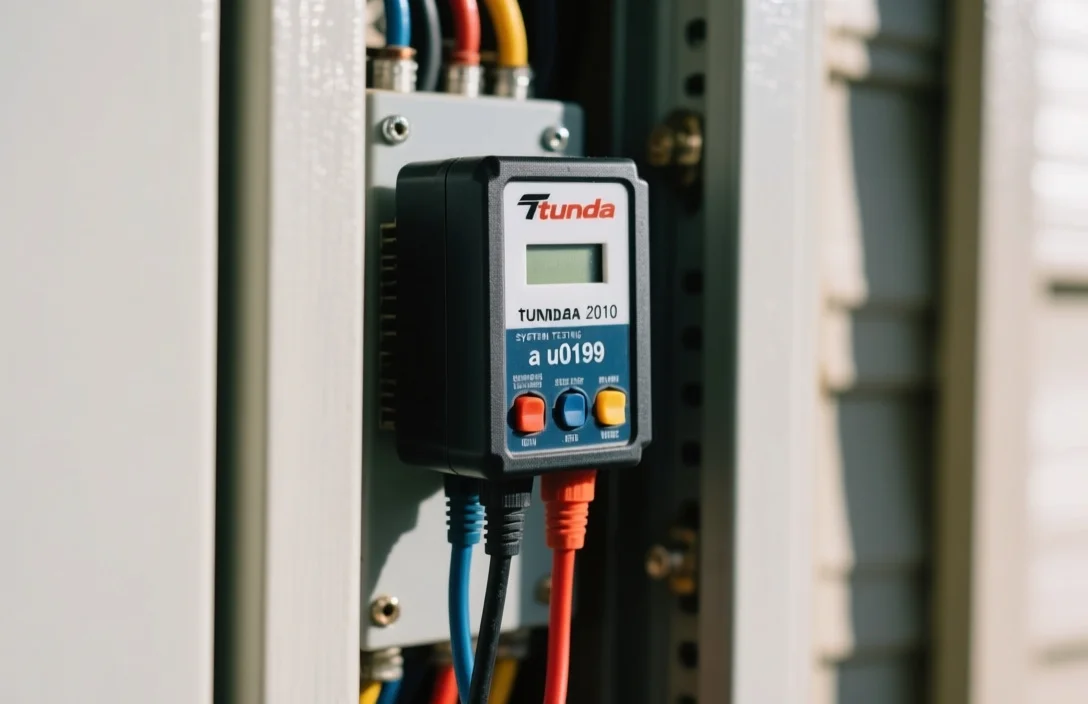
A digital multimeter is essential for testing electrical system wiring in your 2010 Toyota Tundra. It allows you to measure voltage, current, and resistance in various circuits, helping you identify potential issues with your vehicle’s electrical system. A multimeter also includes various test leads and connectors to ensure safe and accurate measurements.
| Item | Amount/Specification | Notes |
|---|---|---|
| Digital Multimeter | 1 unit, 20A capacity or higher, DC and AC measurement capabilities | Ensure the multimeter is calibrated and has a reliable battery to avoid inaccurate readings. |
| Test Leads | Assorted pack with various connectors (e.g., banana plugs, alligator clips) | Choose leads with durable insulation and secure connectors to prevent damage or short circuits. |
| Wire Strippers | 1 pair, with insulated and non-insulated types | Select wire strippers with a comfortable grip and sharp blades for easy stripping and minimal wire damage. |
| OBD-II Scanner | 1 unit, compatible with Toyota vehicles | An OBD-II scanner helps you retrieve error codes, including the U0199 code, and monitor vehicle systems in real-time. |
Step-by-step Diagnostic Procedure For U0199
Communication faults in the 2010 Toyota Tundra door control system usually stem from localized power supply failures or physical damage to the communication bus wiring. Resolving the U0199 code requires isolating the module from the harness to determine if the issue is a dead node or a severed data line.
Power And Ground Verification
Electrical integrity starts at the fuse panel, as the door control module relies on a constant battery feed and a solid chassis ground to maintain communication. Check the integration relay and the corresponding door control fuses in the main junction block located under the driver side dash.
Technician Tip: A blown fuse often points to a shorted component, but corroded or loose fuse contacts are common on high-mileage Tundra models due to vibration.
Harness And Connector Inspection
Wiring fatigue frequently occurs within the rubber boot between the door and the A-pillar, where the harness undergoes repeated bending during normal operation. This area is a high-risk zone for broken copper strands inside the insulation, which can trigger a U0199 code even if the wiring looks intact from the outside.
Pinpoint testing requires a wiring diagram specific to your Tundra trim level to identify the CAN-High and CAN-Low communication lines. If the power and ground are verified and the wiring shows no continuity breaks, the module itself is the likely failure point.
Repair Options For Faulty Door Modules
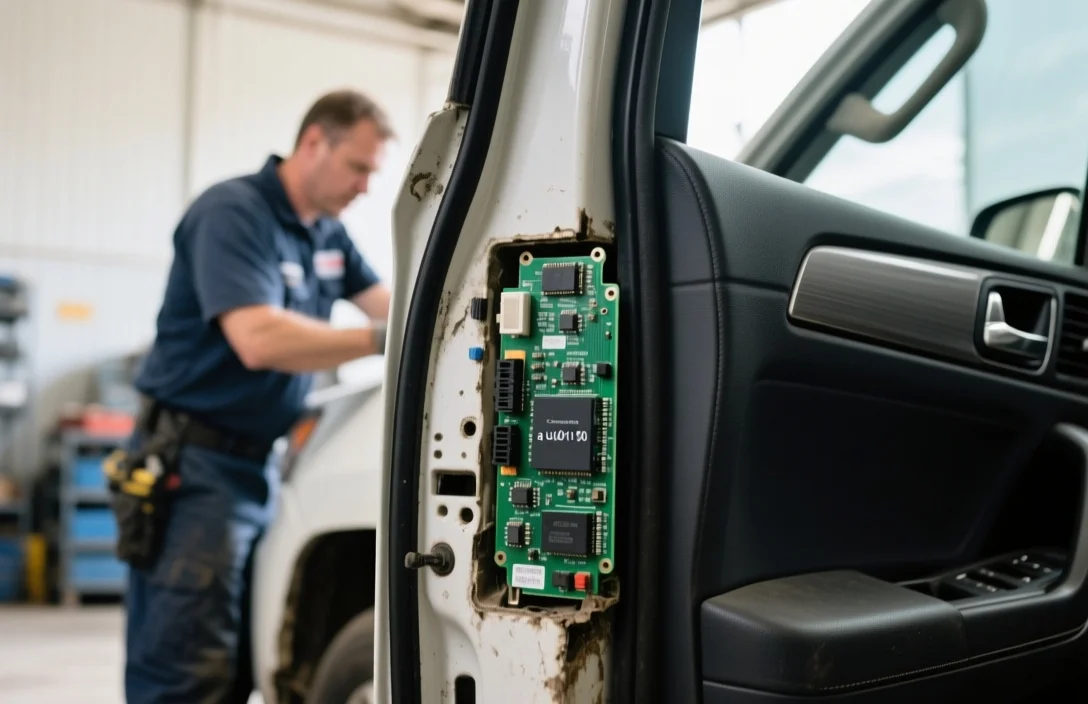
Door control modules are typically sealed units that cannot be repaired at the circuit board level. Fixing a communication failure usually requires replacing the hardware or updating the software via a professional scan tool.
Replacement Criteria
Replacement is the only option when water enters the module housing and corrodes the internal traces. You can often see this as a milky residue or green crust on the connector pins.
Internal component failure, such as a blown capacitor or a failed relay, also demands a new unit. Testing for power and ground at the module is the first step before buying a replacement part.
Software Updates And Programming
Some communication errors result from outdated firmware that causes the module to hang or drop off the network. A Toyota dealership can use Techstream diagnostic software to check for available TSB updates or reflash the module.
For the 2010 Tundra, many modules are plug and play, but some require a specific initialization sequence. This process ensures the windows and locks synchronize with the main body control module.
Avoid buying untested used modules from scrap yards. A module from a different trim level may lack the necessary pins for your specific mirror or lock options.
| Option | Estimated Cost | Pros | Cons |
|---|---|---|---|
| New OEM | $350 – $600 | Full warranty, latest software | High cost |
| Used/Salvage | $75 – $150 | Low cost, fast fix | No warranty, risk of failure |
| Dealer Reflash | $120 – $200 | Resolves software bugs | Only works if hardware is okay |
Maintenance Tips To Prevent Harness Corrosion
Corrosion on door control module harnesses typically develops from moisture intrusion through damaged seals or cracked wire insulation. Regular inspection and maintenance can prevent the U0199 communication fault code from recurring in your 2010 Toyota Tundra.
Cleaning Door Connector Seals
Door connector seals are your first line of defense against moisture intrusion. Inspect these rubber gaskets annually for cracks, tears, or deformation that could allow water to seep into the electrical connections.
“Dielectric grease is not a conductor but rather a protectant. Apply it sparingly to connector terminals only after proper cleaning. Too much grease can actually trap moisture against the contacts.”
Inspecting Wire Integrity In High-wear Areas
Door harnesses experience constant flexing as the door opens and closes, making vulnerable points prone to insulation breakdown. Pay special attention to these areas during inspections.
| High-Wear Area | Common Failure Points | Inspection Frequency |
|---|---|---|
| Door hinge area | Frayed insulation, broken strands | Every 6 months |
| Door boot (rubber grommet) | Cracks, tears, stretching | Every 3 months |
| Connector plugs | Corrosion, loose pins | Every 12 months |
For instance, the door boot on your 2010 Tundra often develops small cracks that allow water to run down the harness. This is a common failure point that leads directly to the U0199 code.
When inspecting wires, look for any signs of discoloration, stiffness, or brittleness in the insulation. These indicate the wire has been exposed to excessive heat or moisture and may need replacement.
Professional technicians recommend using a dielectric spray treatment on the entire door harness every two years as preventative maintenance. This costs approximately $75-125 at a dealership but can prevent expensive electrical failures down the road.
Quick Summary
The 2010 Toyota Tundra‘s door control module may require replacement to resolve the U0199 code, which can be caused by a faulty sensor or electrical issue.
| Causes | Difficulty | Cost |
|---|---|---|
| Faulty door switch or electrical issue | 2-3 hours of labor | $300-$1,000 |
Frequently Asked Questions
What Does The U0199 Code Mean On A 2010 Toyota Tundra?
The U0199 code indicates a loss of communication with the right front door module in your 2010 Tundra. This means the vehicle’s main computer cannot properly communicate with the door control module that manages power windows, locks, and mirrors on the right front door.
How Much Does It Cost To Fix A U0199 Door Control Module On A 2010 Tundra?
Repair costs for a U0199 door control module on a 2010 Tundra typically range from $200 to $600, depending on whether you choose an OEM module from Toyota (usually $400-$600) or an aftermarket replacement ($200-$400), plus labor costs of about $100-$200 for installation and programming.
Can I Drive My 2010 Tundra With A U0199 Code?
You can still drive your 2010 Tundra with a U0199 code, but you may experience issues with the right front door’s power windows, locks, and mirrors functioning properly. The vehicle remains drivable, but the malfunctioning door module could affect safety features like child locks.
What Causes The Door Control Module To Fail On A 2010 Tundra?
Door control module failures on the 2010 Tundra are commonly caused by water intrusion through door seals, damaged wiring from door hinge flexing over time, or internal electronic component failure. In some cases, corrosion from road salt or moisture can short-circuit the module’s circuits.
How Do I Reset The Door Control Module After Replacing It On A 2010 Tundra?
To reset the door control module on your 2010 Tundra, disconnect the battery for 15 minutes, then reconnect it and turn the ignition to the “ON” position without starting the engine. Cycle the right front window up and down completely to reinitialize the system.

- Top 10 Best Battery For Heated Vest 2026 - October 22, 2026
- Top 10 Best Battery For Garmin Livescope 2026 - October 22, 2026
- Top 10 Best Battery For F150 2026 - October 22, 2026