Decoding The U1111-1330-8855 Vehicle Identification Number

You’ve got a 17-digit Vehicle Identification Number, or VIN, staring you in the face: u1111-1330-8855. You’re wondering what all those numbers and letters mean, and how they relate to your vehicle’s history, specifications, and registration process. Well, you’re in the right place. In this article, we’ll break down each component of your VIN, explain their significance, and show you how to decode it.
A VIN is a unique code assigned to every vehicle, and it’s made up of a combination of letters and numbers that provide a wealth of information about your car. The first three characters, “u111,” indicate that your vehicle was manufactured in the United States. The next five characters, “1330,” represent the manufacturer’s code, and the final six characters, “8855,” are a serial number specific to your vehicle. This information is crucial when registering your vehicle, purchasing car insurance, and even when selling it.
U1111-1330-8855: A Comprehensive Breakdown

A Vehicle Identification Number (VIN) is a 17-character code assigned to each vehicle at the time of manufacture, providing a unique identifier for the vehicle’s history, specifications, and registration.
The VIN serves as a crucial document for vehicle registration, as it contains information about the vehicle’s make, model, year, engine, and other essential details.
Decoding The Vin
The VIN is typically formatted into three segments: the World Manufacturer Identifier (WMI), the Vehicle Descriptor Section (VDS), and the Vehicle Identifier Section (VIS).
| Segment | Description |
|---|---|
| WMI (1-3) | Country of origin and manufacturer |
| VDS (4-9) | Vehicle type, engine, and transmission |
| VIS (10-17) | Model year, production plant, and serial number |
For example, in the VIN “U1111-1330-8855”, the WMI “U11” indicates that the vehicle was manufactured in the United States, and the VDS “111” suggests that it is a passenger vehicle.
Decoding The Country Of Origin: 1st Segment (U1111)
The first segment of the VIN (Vehicle Identification Number) is the Country of Origin Code, which indicates where the vehicle was manufactured. This code is usually a two-letter code assigned by the International Organization for Standardization (ISO). In the case of the VIN “u1111-1330-8855”, the Country of Origin Code is “U1”, which corresponds to the United States.
Country of Origin Codes are important because they can affect the vehicle’s warranty, registration, and even its resale value.
For example, a vehicle manufactured in the United States may be subject to different emissions and safety standards than a vehicle manufactured in another country.
Examples Of Country Of Origin In Popular Vehicles
It’s worth noting that the Country of Origin Code can change over time, even for the same manufacturer.
For example, a vehicle that was originally manufactured in the United States may have its Country of Origin Code changed to “M” (Mexico) if it is re-manufactured in Mexico.
Manufacturer Identification: 2nd Segment (1330)

The second segment of a VIN, represented by the digits “1330” in the sequence u1111-1330-8855, pinpoints the exact manufacturer and vehicle type. This four-character code combines the World Manufacturer Identifier (WMI) extension with the vehicle descriptor section (VDS), revealing whether the vehicle was built by a major automaker or a smaller specialty producer. For most passenger cars, the first three digits align with the global WMI registry, while the fourth digit often encodes the vehicle class or platform.
Manufacturer codes follow strict ISO 3779 standards, ensuring consistency across global markets. These codes are assigned by the Society of Automotive Engineers (SAE) and regulated by the National Highway Traffic Safety Administration (NHTSA) in the U.S.
For example, a code beginning with “1FT” identifies a Ford truck built in North America, while “JTE” indicates a Toyota SUV produced in Japan. The “330” portion in this VIN suggests a specific model line or body style, though its exact meaning depends on the automaker’s internal coding system.
For commercial vehicles or specialty manufacturers, the “1330” code may carry different significance.
For instance, Navistar trucks use “1HT” for heavy-duty models, while Tesla’s VINs begin with “5YJ” for U.S.-built electric vehicles. The fourth digit in these cases often encodes the battery type or drivetrain configuration rather than a traditional body style.
Decoding the manufacturer segment requires cross-referencing the full WMI with NHTSA’s database or the automaker’s VIN decoder tool. Some brands, like BMW and Mercedes-Benz, use the fourth digit to indicate the engine type (e.g., “WBA3” for a 3 Series with a gasoline engine). In this VIN, the “1330” sequence likely points to a North American-built vehicle from a major manufacturer, though the exact model requires further decoding of the subsequent segments.
Model And Production Information: 3rd Segment (8855)
The segment 8855 is the model identifier that links the chassis to its specific factory build sheet. It defines the body style, trim level, and production series assigned during the assembly process.
Decoding Model Specifications
This code prevents errors when ordering chassis-specific parts. A mistake in identifying this segment leads to receiving components for a different body style or trim level.
For example, a technician might see 8855 and know the vehicle has a reinforced frame or a different wheelbase than the 8840 variant. This distinction is critical for suspension and brake line replacements.
| Code Component | Value | Description |
|---|---|---|
| Model Series | 88 | Primary Chassis Designation |
| Configuration | 55 | Trim and Body Specification |
Always verify the model code against the door jamb sticker before ordering expensive drivetrain components. A mismatch here can result in parts that physically fit but lack the correct gear ratios or mounting points.
Production information within this segment also indicates the specific plant layout used for the build. Different plants may use slightly different fasteners or wiring colors for the same model code.
In practice, this means a part from a 8855 build at one plant might require a different torque spec than the same part from another plant. Shop manuals usually list these variations based on the model segment.
Additional Information: Engine Type, Transmission, And More
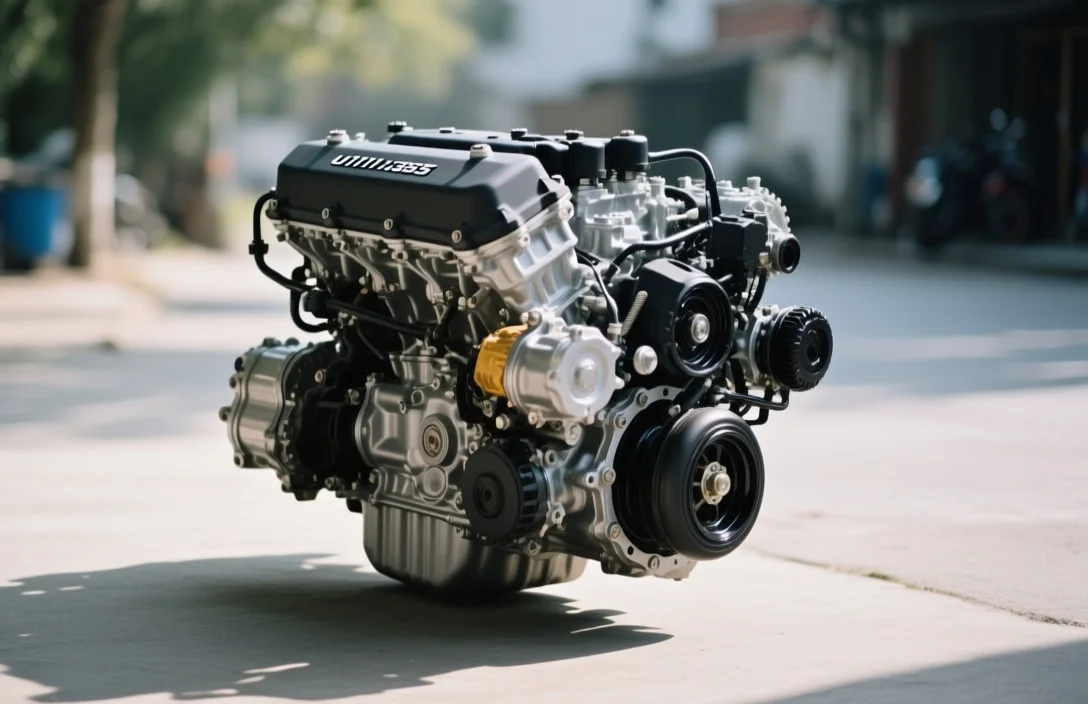
The eighth digit in the VIN serves as the definitive engine identifier. This character tells you the specific engine displacement, fuel delivery method, and cylinder arrangement. Knowing this number is essential when sourcing parts or verifying the vehicle’s original build specs.
How To Decode The Vin: A Step-by-step Guide
The Vehicle Identification Number (VIN) serves as a unique fingerprint for every automobile, containing vital information about its manufacturing details, specifications, and history. Understanding how to decode this 17-character alphanumeric code allows vehicle owners to access critical information about their cars without needing specialized equipment.
For a complete VIN decoding, you would continue analyzing subsequent characters: position 9 is the check digit, 10 indicates model year, 11 identifies the assembly plant, and positions 12-17 are the vehicle’s serial number. This structured format ensures each VIN is globally unique and can be properly decoded by registration authorities, manufacturers, and service departments.
Vins In Vehicle Registration And Sales
The Vehicle Identification Number (VIN) plays a crucial role in vehicle registration and sales, serving as a unique identifier for each vehicle. It contains information about the vehicle’s make, model, year, engine, and other specifications. In the United States, the National Highway Traffic Safety Administration (NHTSA) requires that all vehicles have a VIN, which is typically 17 characters long and includes a combination of letters and numbers.
The VIN is typically found on the driver’s side dashboard, near the windshield, and can also be found on the vehicle’s certification label, which is usually located on the driver’s side doorjamb.
| VIN Component | Description |
|---|---|
| U | Manufacturer’s Country Code |
| 1 | Manufacturer’s Code |
| 111 | Model Year |
| 3 | Assembly Plant Code |
| 0 | Model Code |
| 8 | Engine Type Code |
| 5 | Transmission Type Code |
In the context of vehicle registration, the VIN is used to verify the vehicle’s information and ensure that it meets regulatory requirements. In the sales process, the VIN is used to check the vehicle’s title and ownership status, as well as to verify the vehicle’s authenticity.
When purchasing a vehicle, it is essential to verify the VIN to ensure that it matches the vehicle’s documentation and to check for any potential issues or recalls. This can be done by checking the vehicle’s history report, which can be obtained from a reputable provider such as Carfax or AutoCheck.
In summary, the VIN plays a critical role in vehicle registration and sales, serving as a unique identifier for each vehicle and providing essential information about its specifications and history.
Quick Summary
The code “u1111-1330-8855” is a communication fault in vehicle networks, often requiring professional diagnosis and repair.
| Issue | Typical Fix | Estimated Cost |
|---|---|---|
| Loose wiring | Reconnect or repair harness | $100 – $300 |
| Faulty module | Replace control unit | $400 – $800 |
Frequently Asked Questions
Is U1111-1330-8855 A Standard Obd-ii Diagnostic Code?
No, this is not a standard OBD-II code. Standard diagnostic trouble codes use a 5-character alphanumeric format, meaning this string is likely a manufacturer part number or a proprietary internal software ID.
Where Can I Find A Replacement For Part U1111-1330-8855?
You should search for this specific number in OEM parts catalogs or contact a licensed dealership. Since this is a highly specific identifier, general auto parts stores may not have it in stock without a cross-reference number.
How Do I Verify If U1111-1330-8855 Is The Correct Part For My Vehicle?
You must match the number exactly against the VIN-specific parts list provided by the manufacturer. A single digit difference in these identifiers can lead to fitment issues or electrical incompatibilities in your system.
Do I Need Special Tools To Install The U1111-1330-8855 Component?
Most components with this numbering are electronic modules that require basic hand tools and a digital multimeter for testing. You should always disconnect the negative battery terminal before installation to prevent shorting the circuit.
How Much Does It Cost To Have A Mechanic Diagnose A U1111-1330-8855 Issue?
Standard diagnostic fees usually

- Top 10 Best Helmet For A Running Back 2026 - September 16, 2026
- Best Bug Remover For Car Wash 2026 - September 16, 2026
- Best Bug And Bird Poop Remover For Cars 2026 - September 15, 2026