Can A Car Starter Freeze In Cold Weather?

A car starter can freeze in cold weather when moisture inside its housing turns to ice or internal grease thickens enough to restrict movement. The more common culprit, however, is a weak battery that cannot deliver enough cold-cranking power. The symptoms overlap, so the sound, headlight behavior, and response to warming help separate a frozen starter from a battery problem.
As temperatures drop to 32-50°F, a battery may deliver only 70-80% of its rated CCA, while cranking can require 110-130% of normal. Near 0-32°F, available output may fall to 50-65% of rated CCA while cranking demand rises to 150-200%. That mismatch causes slow cranking, dim lights, and clicking even when the starter itself is healthy.
Key Takeaways
- Yes, a starter can freeze. Moisture inside the housing can turn to ice, sticking internal parts and preventing engagement.
- Listen to the pattern. Slow cranking usually points to battery weakness; one loud click can indicate a starter or solenoid problem.
- Warm the area before forcing another start. Gentle thawing may restore movement without damaging components.
- Keep crank attempts short. Repeated attempts can drain the battery and overheat the starter circuit.
- Prepare before a cold snap. Clean the terminals, use the correct oil, and keep the battery fully charged.
Can a Car Starter Freeze in Cold Weather?
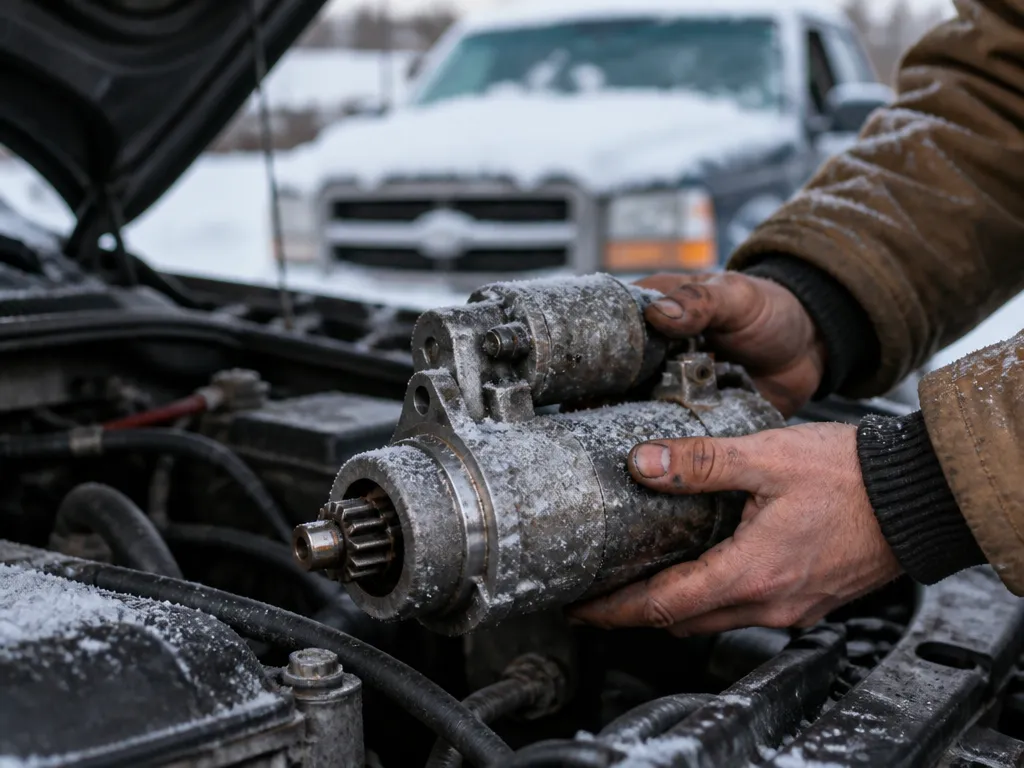
Yes, but a frozen starter is less common than a battery that has lost too much cold-weather capacity.
A starter motor uses electrical current to spin the engine and move a small pinion gear into the flywheel. Moisture inside the starter can freeze and restrict the drive mechanism or solenoid linkage. Thick grease can add friction, especially in a worn starter that has already been exposed to water and corrosion.
Many no-start mornings still come down to battery output. At 70-80°F, a battery can deliver 100% of its rated cold-cranking amperage (CCA). At 32-50°F, it may provide only 70-80% of rated CCA while the engine requires 110-130% of normal cranking power. At 0-32°F, the battery may fall to 50-65% of rated CCA while required cranking rises to 150-200% of normal.
A healthy starter cannot compensate for insufficient voltage. It may click, turn slowly, or fail to engage even though nothing inside it has frozen.
Why Starters Freeze in Winter
Moisture freezing inside the starter housing is the most direct cause. Condensation can form inside the unit, then turn to ice as temperatures plunge. The ice increases friction or physically binds moving parts, including the drive gear and solenoid linkage.
Thickened lubricant and corrosion can make the problem worse. Grease inside small motor components becomes stiffer in extreme cold, particularly when the starter is worn or has been exposed to moisture over time. Corrosion creates rough surfaces that make it harder for the gear to slide into position against the flywheel.
Battery weakness creates the most common false starter diagnosis. Cold slows the battery’s chemical reaction, so it may still power the dashboard but fail to supply the high current needed for cranking. The starter then receives insufficient voltage and may spin slowly, produce a weak whirring sound, or click repeatedly without turning the engine.
How to Tell a Frozen Starter From a Weak Battery
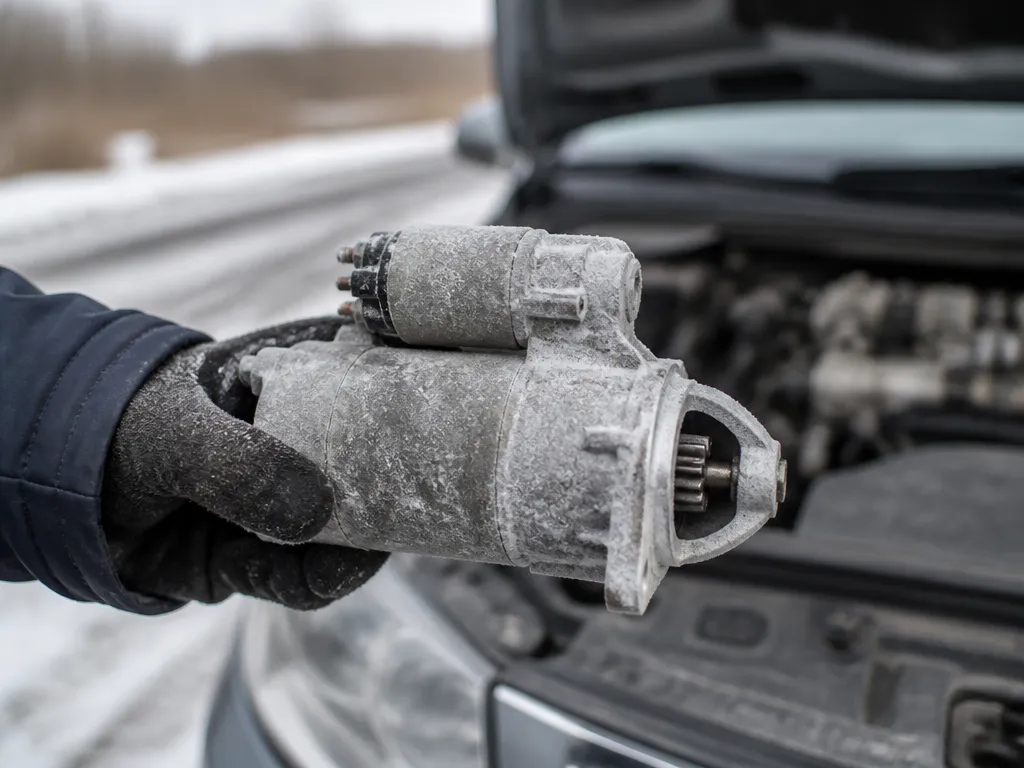
The sound and timing provide useful clues:
- Rapid repeated clicks: Usually indicate that the battery voltage is collapsing under load.
- One loud click followed by silence: Can point to a starter or solenoid that is not engaging correctly.
- Slow cranking: Usually suggests a weak battery, poor cable connection, or excessive engine resistance.
- Dim headlights during cranking: Strongly suggest a weak battery or high resistance at the terminals and cables.
- No electrical response: Points more toward a dead battery, disconnected cable, or other electrical fault than an ice-bound starter.
Temperature response also matters. If the vehicle starts after sitting in a warmer area, thick grease or moisture inside the starter becomes more likely. If the problem continues after the vehicle warms up, suspect the battery, starter, or corroded connections instead.
What to Do When the Starter Will Not Engage
Start with the battery and connections before assuming the starter is frozen. Turn on the headlights, then try the key. If the lights become very dim or go out during cranking, the battery is probably the limiting factor. Check that the battery terminals are clean and tight, and inspect the cables for corrosion or damage.
If the battery appears capable of cranking, warm the starter area gently. Use a safe heat source directed at the outside of the starter, never an open flame. The goal is to melt ice and loosen stiff lubricant without overheating wiring, plastic covers, or seals.
Keep each crank attempt short. A failed attempt drains the battery, and a weaker battery makes a healthy starter appear frozen. After a few brief tries, stop and change tactics: warm the area, correct obvious connection problems, or use a jump-start if the battery is clearly weak.
Safe Ways to Thaw a Starter
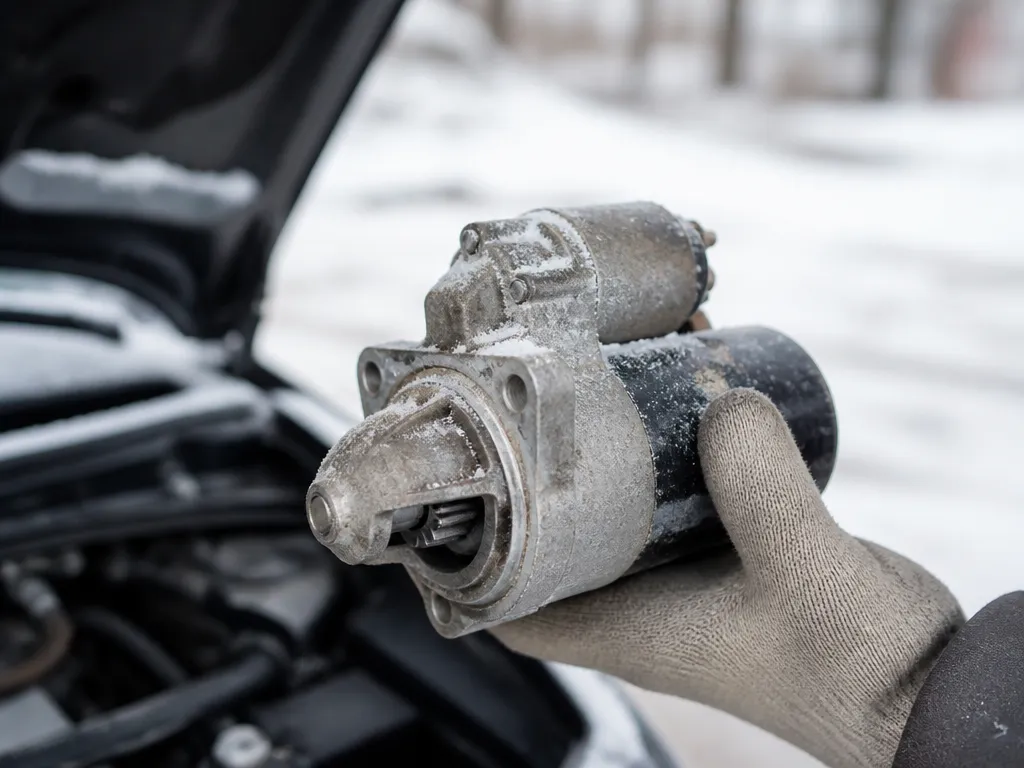
Use gradual, controlled heat. A heating pad placed around the starter can warm the housing without exposing nearby parts to an open flame. Give it enough time for heat to reach moisture and moving components inside the housing.
A safe engine-block heater can also help in severe cold. It warms the engine and reduces the resistance caused by thick oil, which may be the main reason the starter is struggling. Avoid blasting the starter with intense heat. Excessive heat can damage insulation, alternator wiring, plastic parts, and seals.
Stop thawing when the starter still will not engage after a reasonable warm-up. Burning smells, melted plastic, or repeated electrical faults mean the vehicle needs diagnosis rather than more heat. Stop immediately if reaching the starter would put you near moving belts or hot exhaust components.
At that point, test the battery, cables, solenoid, and starter circuit instead of repeating crank attempts.
Can a Frozen Starter Damage the Battery or Engine?
A frozen starter usually will not directly damage the engine, but repeated attempts can drain the battery and stress the starter circuit. The starter draws high current, so every failed attempt pulls system voltage down and leaves less power for the next one.
A bound starter can also overheat its windings, solenoid, relay, and electrical connections. It may continue drawing current without turning the engine, creating heat and electrical wear. Continued cranking can turn a temporary sticking problem into a starter repair.
Jump-starting requires the same caution. If the starter is mechanically stuck, repeated jump-and-crank attempts can overload the electrical system without solving the underlying problem. Thaw the area first, then make a limited number of short attempts. If the starter still will not engage, move on to proper testing.
How to Prevent Starter Problems in Winter
Start with the battery. At 32-50°F, it may deliver only 70-80% of rated CCA while cranking demand can rise to 110-130% of normal. A battery that barely works in mild weather may fail during a hard freeze. Keep it fully charged before winter and clean and tighten the terminals to reduce voltage loss.
Limit moisture around the starter and battery. Vehicles stored outdoors or driven through slush are more likely to develop corrosion and condensation problems. Look for damaged insulation, corrosion, cracks, or water pooling near the starter. A compromised housing or seal can let moisture inside, where it may later freeze and restrict movement.
Use the engine oil viscosity recommended for winter conditions. Cold oil becomes thicker and increases the resistance the starter must overcome. Long warm-up periods while parked can also drain the battery in some situations because the alternator may not produce enough output under certain conditions. Starting and driving normally usually warms the engine more effectively while keeping the charging system active.
Winter Starter Prevention
- Clean the battery terminals. Corrosion increases voltage loss when the starter needs maximum current.
- Keep the battery charged. Cold reduces available CCA, so a partially charged battery fails sooner.
- Use the correct oil. Cold-weather viscosity reduces extra resistance during cranking.
- Inspect for starter moisture. Check for cracks, corrosion, or water pooling near the starter.
- Avoid extended cranking. Short attempts protect the battery and starter from repeated high-current stress.
FAQ
Can a car starter freeze in cold weather like sub-zero temperatures?
Yes. Moisture inside the starter can freeze and bind internal parts when temperatures are low enough for condensation to turn to ice. Most winter starter failures are still battery-related, however, because cold reduces available CCA and increases cranking demand. The starter may be fine but unable to receive enough current.
What is the fastest safe way to unfreeze a car starter?
Warm the starter area gently, wait for the heat to reach the housing, then make a limited number of short crank attempts. A heating pad wrapped around the starter is a controlled option and is safer than an open flame. If the starter still will not engage after warming, stop cranking and test the battery, connections, and starter circuit.
Will a frozen starter ruin the battery?
A frozen starter usually will not freeze-damage the battery, but repeated unsuccessful cranking can drain it and increase stress on the starter circuit. Keep attempts short and switch to thawing or diagnosis before the battery becomes completely discharged.
How can I tell whether the problem is the starter or the battery?
Use the sound, headlight behavior, and response to warming as clues. Slow cranking and dim headlights indicate battery or connection problems, while one loud click with no cranking can point to the starter or solenoid. Test the battery and connections before concluding that the starter is frozen.
Is it better to use a jump starter or thaw the starter first?
Thaw the starter first when the symptoms suggest that it is mechanically stuck. A jump starter can help when the battery is too weak, but repeated jump-start attempts with a bound starter can place more strain on the electrical system. If the headlights are very dim and the engine never turns, check the battery and connections, warm the starter area, and retry only briefly.

- Top 10 Best Helmet For Xtreme 125r 2026 - October 5, 2026
- Top 10 Best Helmet For Xpulse 200 2026 - October 5, 2026
- Top 10 Best Helmet For Xsr 155 2026 - October 5, 2026