Car Idles Fine But Sputters When Accelerating: 5 Root Causes

A car that idles smoothly but sputters when you accelerate usually has a fuel, air, sensor, or ignition problem that appears under load. At idle, the engine needs very little fuel, air, and spark. Open the throttle, and the system must respond immediately. A weak fuel pump, clogged filter, intake leak, faulty airflow sensor, or weak ignition coil may work at idle but fail when demand rises.
Fuel delivery is often the first place to look, especially if the sputter begins as soon as you press the gas. An intake leak, bad airflow sensor, throttle problem, or ignition fault can produce the same sensation, so the timing of the sputter and a scan for trouble codes matter.
Key Takeaways
- Most common cause: Fuel pressure dropping under acceleration can cause sputtering while the engine idles smoothly.
- Watch the timing: A stumble immediately after pressing the gas points toward air or fuel metering, although ignition faults can also appear under load.
- Use a scan tool: Misfire and fuel-trim codes often identify the failing system.
- Check for intake leaks: Small vacuum leaks can be masked at idle but disturb the mixture during throttle changes.
- Repair and retest: Fix the most likely fault, then repeat a controlled test drive before replacing more parts.
Why the Engine Sputters Only When You Accelerate

When a car idles fine but sputters under acceleration, it can maintain stable combustion at low airflow but cannot keep up when the throttle opens. The engine suddenly needs more air, fuel, and spark. A fault in any one of those systems can cause hesitation, bucking, or a sputtering sound.
The exact timing narrows the search:
- Sputtering immediately when you press the pedal: Check fuel pressure regulation, fuel-pump volume, throttle and air metering, vacuum leaks, and ignition breakdown.
- Sputtering after several seconds of acceleration: Fuel delivery and fuel-trim problems become more likely because demand stays high.
- Sputtering only with light throttle: Suspect airflow measurement, throttle response, or a small intake leak.
- Sputtering only with hard throttle: Check fuel starvation and ignition components that break down under high cylinder pressure.
- Sputtering in only one gear or during shifts: Consider transmission load, torque-converter, or clutch problems.
Other symptoms can point in a specific direction. A raw-fuel smell may indicate an injector that is leaking or an ignition misfire that leaves fuel unburned. Popping through the intake can indicate an air/fuel imbalance. A misfire that becomes worse under load often leads to the ignition system, although fuel starvation can feel nearly identical.
Fuel Problems That Cause Sputtering Under Load
Fuel delivery is a strong starting point because a fuel system may provide enough pressure and flow to maintain idle but fall short when acceleration increases demand. The mixture then goes lean, and the result can feel like sputtering or bucking.
A failing fuel pump is a classic cause. The pump may produce adequate pressure at idle but lose pressure or volume when the engine needs more fuel. A clogged fuel filter can create the same problem by restricting flow during throttle openings.
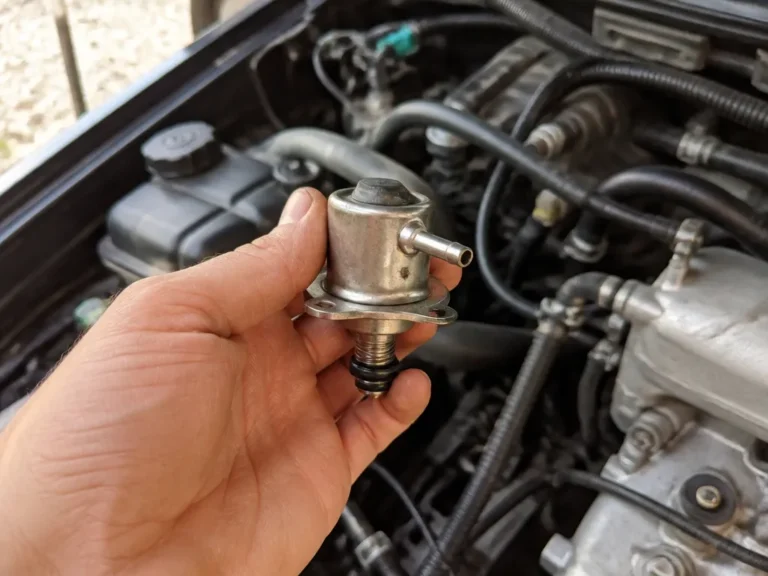
Fuel injectors can also cause an idle/acceleration split. A partially clogged injector may maintain an acceptable idle mixture but fail to deliver enough fuel during rapid acceleration. A leaking injector can create the opposite problem by making the mixture too rich or causing a raw-fuel smell. A faulty fuel-pressure regulator may also fail to keep pressure correct as manifold vacuum changes.
Common fuel-related causes include:

- Weak or failing fuel pump, with pressure dropping under load
- Clogged fuel filter, restricting fuel volume
- Faulty fuel-pressure regulator, causing incorrect pressure during vacuum changes
- Leaking or clogged injector, creating uneven fueling during transitions
- Low fuel level or poor pickup performance, allowing the pickup to uncover during acceleration
If short, hard accelerations from a stop reproduce the problem quickly and consistently, fuel delivery deserves priority. A car that runs properly until it warms up may have a fuel pump that fails when hot, although heat-related coil or sensor problems can create a similar pattern.
A fuel-pressure test under load is more useful than checking pressure only at idle. If pressure drops during acceleration, the pump, filter, wiring, regulator, or fuel pickup needs further testing rather than automatic parts replacement.
Airflow Sensors and Intake Leaks
Air problems can feel exactly like fuel problems. The engine computer depends on accurate airflow information and a sealed intake system to calculate the correct air/fuel ratio. A leak or incorrect sensor reading can cause a stumble when the throttle opens.
A vacuum leak may be small enough for the engine to compensate at idle. During acceleration, airflow patterns change quickly, and the leak can represent a larger error in the total air entering the engine. The mixture may become lean or unstable, producing bogging or sputtering.
The mass airflow sensor, or MAF, is another common suspect. If it reports less air than is actually entering the engine, the computer may add too little fuel. A dirty MAF or failing sensor element may allow a steady idle because airflow is low and predictable, then cause hesitation as airflow rises abruptly.
Inspect the throttle body and intake tract as well. A sticky throttle plate, dirty throttle bore, cracked intake hose, or loose clamp can interfere with the transition from idle to acceleration. The engine may stabilize at its normal idle airflow but struggle when the throttle angle changes.
Prioritize the checks this way:
- Inspect intake hoses, clamps, and vacuum lines for cracks, loose connections, or disconnected lines.
- Check aftermarket additions that may have created an unmetered air leak, including vacuum-disconnected accessories, capped ports, or poorly installed intake parts.
- If the vehicle has a MAF sensor, check for relevant mixture, airflow, or MAF-correlation codes and determine whether the sensor may be dirty.
- Inspect the throttle body for obvious buildup or a sticking throttle plate, following the vehicle maker’s cleaning procedure.
Fluctuating idle or stalling after deceleration makes an intake or sensor problem more likely. A steady idle with a sputter only during acceleration points more specifically toward a transient air-metering problem or a fault that appears as airflow rises.
Ignition Faults That Appear Under Acceleration
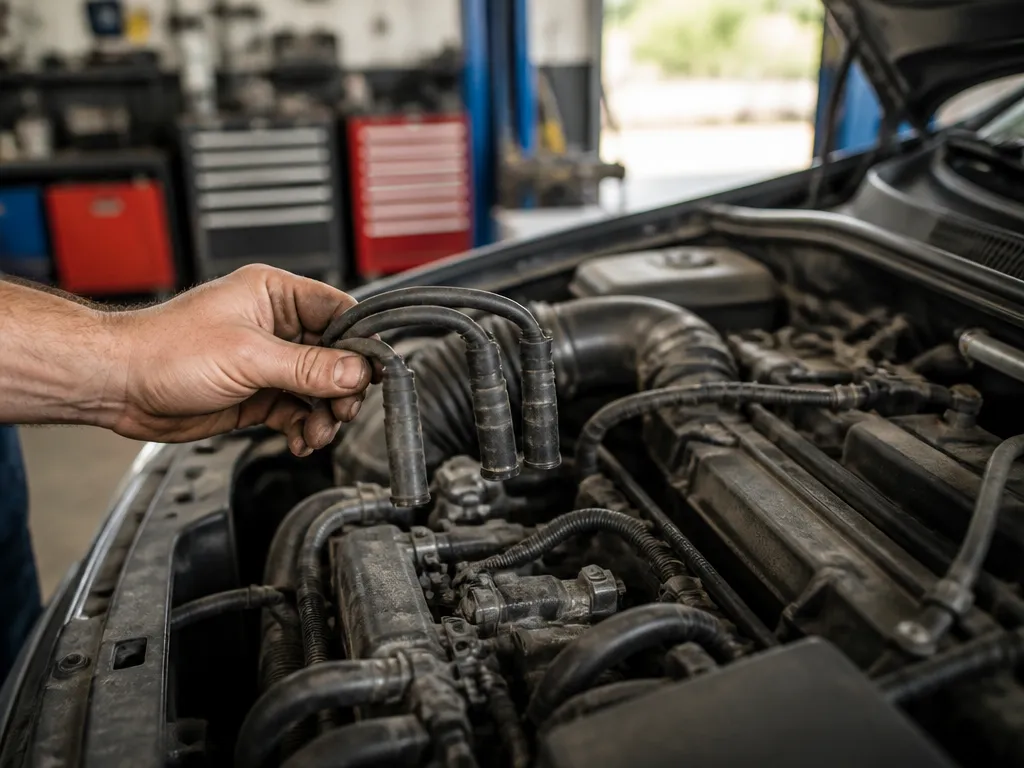
A weak ignition system can mimic fuel starvation. As cylinder pressure rises under acceleration, the spark needs more energy to jump the plug gap. A component that works at idle may break down when the engine is under load.
Common causes include worn spark plugs, failing ignition coils, cracked coil boots, corroded connections, and high-voltage insulation breakdown. A single-cylinder misfire may barely affect idle, especially if the engine control system can compensate at low load. During acceleration, the misfire rate can increase sharply and feel like sputtering.
Coil failure is especially plausible on coil-on-plug engines. Heat and moisture can worsen a weak coil, so the problem may be intermittent or more noticeable on humid days or after the engine warms up. A damaged plug boot or poor electrical connection can create the same pattern.
If a scan tool shows cylinder-specific misfire counts, use that information before replacing parts. Even without trouble codes, note whether the sputter occurs on every acceleration attempt or only occasionally. A repeatable stumble can fit a worn plug or failing coil, while an intermittent fault may point toward wiring, a loose connection, moisture, or a component that fails as it heats up.
Do not overlook spark-plug condition and gap. If the plugs are due for replacement or their service history is unknown, they are a reasonable inspection point. Replacing them may confirm or eliminate a common cause, but swapping parts without checking the evidence can leave the original fault unresolved.
A flashing check engine light during acceleration indicates an active misfire risk. Stop repeated hard acceleration and limit driving until the cause is repaired because unburned fuel can overheat and damage the catalytic converter.
Throttle, Transmission, and Exhaust Problems
Not every acceleration stumble comes from combustion. Drivetrain behavior can create a sensation that feels like engine sputtering, particularly when the problem occurs during a shift or in a specific gear.
On an automatic transmission, a slipping torque converter, delayed shift, or failing shift solenoid can change engine load abruptly. The engine may rev, bog, or surge as the transmission changes how much torque reaches the wheels. If the problem appears only during shifts or in one gear, transmission load moves higher on the list.
On a manual transmission, clutch slip can be mistaken for hesitation. If engine speed rises but vehicle speed does not increase as expected, the clutch is failing to transfer power rather than the engine failing to combust properly.
Electronic throttle systems add another possible cause. The throttle-position sensor and electronic actuator control how quickly the throttle opens. Incorrect position feedback or an actuator fault can cause hesitation during the first part of pedal movement as the computer responds to inaccurate information.
A restricted exhaust or heavy carbon buildup can also reduce power under load. Severe exhaust restriction affects the engine’s ability to breathe as airflow increases. This is less common than fuel, air, and ignition faults, but it deserves attention if the vehicle also has reduced power, a high idle, or a strong exhaust odor.
Use the driving pattern to separate these possibilities:
- Same sputter in every gear immediately after pedal input: Fuel, air, throttle, or ignition problems are more likely.
- Sputter only during shifts or in one gear: Transmission or drivetrain load problems deserve closer inspection.
- Engine speed rises without matching vehicle acceleration: Suspect clutch or torque-converter slip.
- Poor power across the entire rpm range with strong exhaust odor: Check for an exhaust restriction or severe fueling problem.
Scan-Tool Checks and Simple Inspections
A scan tool can turn several similar-feeling symptoms into a more targeted diagnosis. Start with the information the vehicle computer has already recorded.
- Check stored and pending trouble codes. Pending codes may appear before the check engine light stays illuminated.
- Look for misfire codes and note which cylinder or cylinders are affected.
- Review short-term and long-term fuel trims if the scan tool displays them, especially while the sputter occurs.
- Monitor airflow and throttle position during a controlled throttle change to see whether the readings respond normally.
Fuel-trim behavior can help separate lean and rich conditions. Fuel trims that rise as the engine goes lean under acceleration point toward fuel delivery, MAF accuracy, or an intake leak. Rich correction under load can point toward injector problems, EVAP purge-control faults, or an airflow reading that is incorrect in the opposite direction.
Then perform basic checks that do not require specialized equipment:
- Inspect the intake tract for loose clamps, cracked hoses, and disconnected vacuum lines.
- Check electrical connections near the coils, injectors, and sensors for corrosion or looseness.
- Confirm battery and charging health because low system voltage can affect ignition performance under load.
- Verify fuel quality and level if contamination or fuel-pickup behavior is possible.
- Compare cold and fully warm operation to identify faults that change with temperature.
A sputter that occurs only when hot can fit fuel-pump performance problems, coil heat breakdown, or sensor feedback that changes fuel trims. A cold-only problem may relate to enrichment strategy, an intake leak that changes with temperature, or an ignition or sensor fault.
If you have a multimeter and know how to use it safely, you can check coil primary voltage and ground quality. Avoid probing ignition circuits or performing electrical tests you do not understand. For most drivers, scan-tool data combined with a careful intake and ignition inspection is the safest efficient starting point.
Repair the Cause and Retest Without Making the Problem Worse
Repair the component that the evidence identifies instead of replacing unrelated parts. After the repair, clear the codes if appropriate and perform a controlled retest so you can confirm the fault is gone.
Use this repair sequence for common findings:
- Intake leak: Repair the hose, gasket, or vacuum line. Clear codes if needed, then repeat short accelerations.
- Fuel-delivery fault: Use fuel trims, codes, and a pressure test when possible. Address the most likely component, such as the fuel filter or pump, based on the vehicle’s age and symptoms.
- Ignition misfire: Use cylinder-specific data to identify the affected plug, coil, boot, or connection. Replace the correct component rather than changing every ignition part automatically.
- Throttle or airflow fault: Inspect connectors and wiring first. Clean the throttle body when appropriate for the vehicle, and clean a dirty MAF only with the correct product and procedure.
- Transmission or clutch symptom: Have the drivetrain inspected if the engine speed, gear, or shift pattern determines when the problem occurs.
Sputtering can damage components if the engine is repeatedly misfiring. If the check engine light flashes or appears immediately during acceleration, drive gently and keep test trips short until the fault is resolved. Avoid prolonged wide-open-throttle testing, especially when misfire or lean codes are present.
Retest in stages:
- Start the car and confirm that idle remains stable.
- Use light acceleration to check for an immediate stumble.
- Repeat with medium acceleration.
- If those tests are smooth, use one short stronger acceleration to check performance under load.
- Confirm that the sputter does not return in the same conditions.
If the problem returns, scan the vehicle again and compare the new codes and live data with the original results. That comparison is more useful than guessing at another replacement part.
FAQ
Why would my car idle smoothly but sputter only when I accelerate?
The engine can maintain a stable air/fuel mixture at low load but lose the correct fuel delivery, airflow measurement, or spark when throttle opening increases. Fuel-pump or fuel-pressure problems, intake leaks, MAF faults, ignition-coil failures, and worn spark plugs can all cause this pattern. Scan codes, then inspect the intake and ignition systems before replacing parts.
Can a clogged fuel filter cause sputtering during acceleration?
Yes. A clogged filter can restrict fuel flow until fuel pressure or injector supply becomes inadequate under acceleration. The resulting lean stumble often begins when you press the pedal, while the engine continues to idle normally. Fuel restriction is a strong suspect when the car hesitates under load.
What is the quickest test I can do without tools?
Inspect the intake hoses, clamps, and vacuum lines for cracks or looseness. Then check visible electrical connections near the coils, injectors, and sensors. If you can safely reproduce the issue, note whether it happens immediately at throttle opening or after several seconds. That timing helps distinguish air and throttle response problems from fuel delivery issues.
Should I replace spark plugs or a fuel pump first?
Use the symptoms and scan data. Misfire codes or cylinder-specific misfire counts point toward plugs, coils, or related ignition wiring. Fuel-trim data and symptoms of fuel starvation under load point toward fuel delivery. Without scan data, begin with low-risk checks such as intake leaks and the basic ignition components whose service history is known. Avoid replacing a fuel pump or other expensive component without evidence.
Is it safe to keep driving if it sputters when accelerating?
Drive only lightly until you know the cause, especially if the check engine light flashes or the engine repeatedly misfires. A flashing warning can indicate a misfire severe enough to damage the catalytic converter. A mild, intermittent stumble may allow a short trip to a repair shop, but repeated sputtering under load should be addressed promptly.

- Top 10 Best Helmet For Xpulse 200 2026 - October 5, 2026
- Top 10 Best Helmet For Xsr 155 2026 - October 5, 2026
- Top 10 Best Helmet For Xc Mtb 2026 - October 5, 2026