Car Makes Humming Noise When Ac Is On: Identify The Source In 4

If your car makes a humming noise only when the AC is on, the most common causes are an AC fan, compressor, or related drive component reacting to the added load. You can usually narrow it down within minutes by checking whether the sound changes with cabin fan speed, blower settings, or engine RPM. The pattern helps identify the source before you pay for a repair.
A hum that rises with blower speed or comes from behind the dash points toward the cabin blower motor. A hum that follows engine RPM or appears when the compressor engages points more toward the compressor, clutch, belt, tensioner, or another accessory. A front-of-car hum may also come from the condenser fan.
Quick Clues to the Source
- Start with the pattern. Notice whether the humming changes with cabin fan speed or engine RPM.
- Locate the sound. Dash-level noise points toward the blower motor; noise from the front of the car points toward the compressor or condenser fan.
- Check cooling performance. Weak cooling combined with humming raises suspicion of low refrigerant or a leak.
- Separate compressor from blower noise. Compressor noise follows AC engagement; blower noise follows the fan setting.
- Inspect common wear items. Loose belts, failing idler or tensioner pulleys, and worn bearings can mimic AC problems.
- Diagnose safely. Do not open the refrigerant system or guess at pressure readings.
Why Your Car Hums When the AC Is On

A humming noise that starts when you switch on the AC usually means a component is loading up or spinning: the compressor, condenser fan, cabin blower, or a related drive part.
Three sources account for many of these complaints. The cabin blower motor behind the dash produces a steady hum that changes with the fan setting. The compressor at the front of the engine can produce a lower-frequency hum when it engages or cycles. Belts and pulley bearings can also sound like AC problems because the compressor puts extra load on the accessory drive.
A hum that gets louder when you lightly accelerate with the AC running points away from the dash blower and toward the compressor or accessory-drive system.
Does the Hum Follow Speed or AC Operation?
Separate three variables: the AC switch, cabin blower speed, and vehicle speed or engine load.
With the car idling, turn the AC on at a low fan setting and listen to the volume and pitch. Increase the cabin fan speed without changing vehicle speed. Then, while keeping the AC on, slightly change engine load – for example, shifting to Drive from Park only when it is safe and you can do so carefully. A hum that changes with cabin fan speed is probably coming from the blower. A hum that changes when the compressor cycles or engine RPM changes is more likely compressor- or belt-related.
A noise that appears while driving but disappears when you turn the AC off can still come from compressor load, not vehicle speed alone. If the hum remains with the AC off at highway speeds, look beyond the AC system. Tires, wheel bearings, driveshaft components, or road noise may be responsible.
AC Components That Can Hum
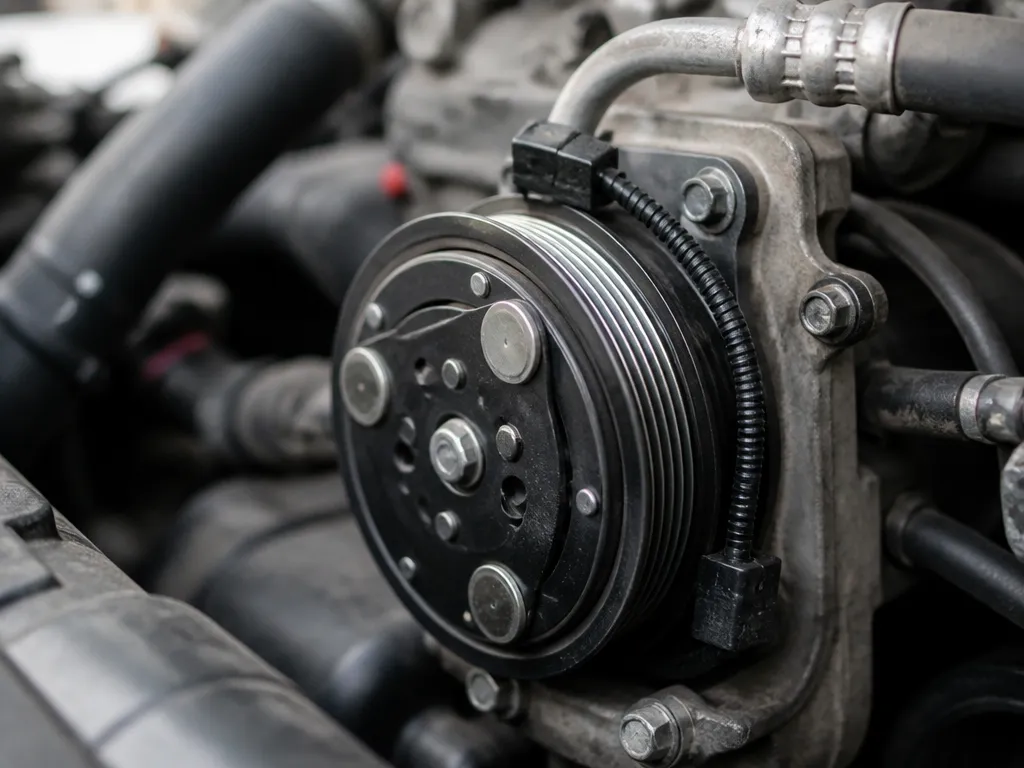
Several components can create a hum, and each responds differently to the car’s controls.
The cabin blower motor and fan sit behind the dash. Worn blower-motor bearings can produce a steady hum, rough growl, or louder vibration that changes immediately with fan speed. A failing blower can make the cabin sound like the AC is humming even when the compressor is healthy.
The compressor sits at the front of the engine and is usually belt-driven. It may produce a steady hum when engaged, then become quieter as it cycles off. Compressor operation changes with temperature, pressure, and engine load, so the sound may come and go.
The condenser fan or electric fan module can also hum. On some vehicles, the condenser fan runs whenever the AC is on and may sound different at idle than while the car is moving. A hum that is loudest near the front grille, especially with the cabin fan set low, points toward this fan rather than the blower motor.
Accessory-drive vibration creates another common false AC diagnosis. A worn serpentine belt, tensioner, idler pulley, or pulley bearing may become noisy only when the compressor adds load. The noise starts with the AC, but the compressor may not be the failed part.
How to Tell the Compressor From the Blower Motor
Location and control changes usually separate these two causes.
Sit in the driver seat with the windows up. A sound behind the dash or near the vents points toward the cabin blower. A sound from the front of the engine bay or near the grille points toward the compressor or condenser fan.
Keep the AC on and change only the cabin fan speed. A blower-motor hum rises and falls with the fan setting. A compressor-related hum may change when the compressor engages or engine load varies, but it usually does not track the cabin fan knob one-to-one.
Listen at a stoplight with the cabin fan set at one speed. If the sound becomes louder, softer, and louder again as the compressor cycles, compressor operation is a strong possibility. If the hum stays steady and changes directly with blower speed, the blower motor is the better bet.
Use these two comparisons:

- Keep the cabin fan at a constant setting and turn the AC off, then back on. If the hum disappears immediately with the AC off, the compressor or another AC-related component is likely involved.
- Keep the AC on and vary the cabin fan speed. If the hum follows the fan closely, focus on the blower motor and fan.
For example, a quiet hum at fan setting “2” that becomes clearly louder and higher at “7” points toward the blower motor. A low hum near the front of the car that does not change with fan speed points toward the compressor or condenser fan.
Low Refrigerant, Leaks, and Humming
Low refrigerant can cause abnormal compressor operation, but it usually comes with weak cooling or other performance changes.
The AC may blow warmer air than expected or cycle more aggressively as the system responds to pressure and temperature changes. In some cases, the compressor may make unusual sounds as it struggles to move refrigerant through the system.
The leak is the underlying problem. Adding refrigerant may quiet the symptoms temporarily, but the system will become low again unless the leak is repaired. A humming noise combined with weak cooling warrants a professional inspection for leaks.
Other clues include ice on refrigerant lines, unusually high pressure readings if a mechanic checks them, or a compressor that cycles rapidly. Those symptoms can indicate low refrigerant, restricted flow, or a failing component.
A hum with very weak cooling makes low refrigerant more plausible. A hum with normal or strong cooling that appears only at certain fan settings points more toward blower-motor bearings or a belt and pulley problem.
Do not diagnose refrigerant by pressure at home unless you have the correct gauges and training. Refrigerant handling is hazardous, and venting refrigerant into the air is illegal. Have a properly equipped technician check the pressures and perform leak testing.
Belts, Pulleys, and Bearings That Mimic AC Noise
Belts and bearings can hum only when the compressor loads the accessory drive. This is a common false AC diagnosis.
With the engine off, inspect the serpentine belt for glazing, cracks, fraying, or shiny spots that suggest slipping. Confirm that it sits correctly on the pulleys, and look for tears along the edges. Oil or coolant around the pulleys can contaminate the belt and create noise.
For a basic listening check, open the hood with the engine idling and stay clear of moving parts. Have a helper carefully turn the AC on and off. A sharp change when the compressor engages, combined with a rotating mechanical sound from the front of the engine bay, makes a pulley or tensioner bearing a realistic suspect.
Worn bearings often change character as they deteriorate. An early failure may sound like a steady hum or light growl. Later, it can produce chirping, squealing, or rough rattling. A noise that increases when you raise RPM slightly also supports a belt-driven component.
If the cabin fan setting makes little difference and the hum comes from the engine bay, check the idler pulleys and belt tensioner before condemning the compressor. These wear items carry more load when the compressor runs.
Stop driving and arrange service if you see belt wobble, a misaligned pulley, or hear grinding. A failing belt or pulley can lead to belt failure and loss of accessory operation.
Safe Checks Before Paying for a Repair
You can narrow down the problem without opening the AC system or replacing parts based on a guess.
Keep your hands away from belts, fans, and rotating pulleys. Secure loose clothing and hair. Use your ears, and record the noise with your phone if that helps you compare the patterns. Perform the checks in a well-ventilated area with the parking brake on.
With the car idling, make these changes in order:
- Turn the AC off and listen for 10 to 20 seconds.
- Turn the AC on with the fan set low and listen for 10 to 20 seconds.
- Set the AC fan to high and note whether the hum changes in pitch or volume.
- If it is safe, lightly change engine load by shifting from Park to Drive and note whether the hum follows RPM.
Check the AC’s performance as well. Weak cooling increases the priority of refrigerant and leak testing. Strong cooling combined with a mechanical, speed-related noise increases the priority of the blower motor, belts, pulleys, or bearings.
Stop DIY diagnosis if you suspect a refrigerant problem. Arrange a professional AC inspection and leak test. If a belt or pulley seems noisy, have it checked before it fails. If the blower motor is the likely source, a shop can test it and determine whether replacement access varies by vehicle model.
| What the hum does | Cooling performance | Most likely starting point |
|---|---|---|
| Changes with cabin fan knob | Normal or strong | Blower motor or fan |
| Changes with AC on/off, not with fan knob | Normal or strong | Compressor or condenser fan |
| Changes with RPM/load | Often noticeable in engine bay | Belt, idler, or tensioner bearing |
| Comes with weak cooling | Weak cooling | Low refrigerant or leak |
| Gets rougher over days/weeks | Usually varies | Bearing wear in blower or accessory pulleys |
FAQ
What does a humming noise from the AC usually mean?
A hum that appears when the AC is on usually comes from a fan motor, compressor, or accessory drive under load. Cooling performance and the sound’s location help distinguish among them.
Can low refrigerant cause a humming sound?
Yes. Low refrigerant can cause abnormal compressor operation and unusual noises, especially when the AC is cooling poorly. Other symptoms may include slower cooling, longer compressor cycling, or uneven temperature control. Have the system checked for leaks and correct pressures instead of repeatedly adding refrigerant.
Is it safe to drive if the AC is humming?
Short trips are often reasonable if the AC still cools normally, the noise is mild, and it is not getting worse. Avoid driving and arrange a prompt inspection if you hear rough grinding, notice squealing, or see a damaged or unstable belt. A failing compressor or accessory-drive component can eventually cause loss of accessory operation.
How do I tell if it is the compressor or blower motor?
Change one control at a time and listen to the sound’s location. The blower is behind the dash, while the compressor and condenser fan are near the front grille or engine bay.
What is the most common mistake with this problem?
Replacing the compressor before checking cheaper, common causes. A worn blower motor, failing belt tensioner or idler pulley, or condenser fan problem can all become noticeable when the compressor runs. Another mistake is adding refrigerant without leak testing when cooling is weak.
Start with two observations: whether the hum follows the cabin fan knob and whether the cooling is strong or weak. Those answers usually point you toward the blower motor or the compressor and accessory-drive system. Match the symptoms to the table, then have the relevant parts and refrigerant system inspected rather than replacing the compressor on a guess.

- Top 10 Best Helmet For Xtreme 125r 2026 - October 5, 2026
- Top 10 Best Helmet For Xpulse 200 2026 - October 5, 2026
- Top 10 Best Helmet For Xsr 155 2026 - October 5, 2026