Car Stuck In Reverse But Shifter Moves?

A car stuck in Reverse while the shifter still moves usually has a mismatch between the shifter’s command and the transmission’s actual gear position. Common causes include a damaged shift cable or linkage, a faulty transmission range sensor or wiring problem, and a valve body or solenoid fault that keeps Reverse applied.
If Reverse engages when you select Park or Drive, stop driving. Keep your foot on the brake, secure the vehicle, and have it inspected. The car could lurch or stall even though the shifter feels normal.
Quick Checks Before Repair
- Keep the car stationary. Do not test it on the road if it engages Reverse unexpectedly.
- Watch the dashboard gear display. A PRND mismatch can point toward the linkage, range sensor, or wiring.
- Check the transmission-side linkage. Look for a disconnected cable, worn bushing, excessive play, or restricted movement.
- Pay attention to starting behavior. A car that starts only in certain positions may have a range sensor or interlock problem.
- Scan for trouble codes. Transmission and range sensor codes can narrow the diagnosis.
- Do not assume the transmission needs a rebuild. Confirm that the selector and sensor work correctly before authorizing internal repairs.
Car Stuck in Reverse But Shifter Moves
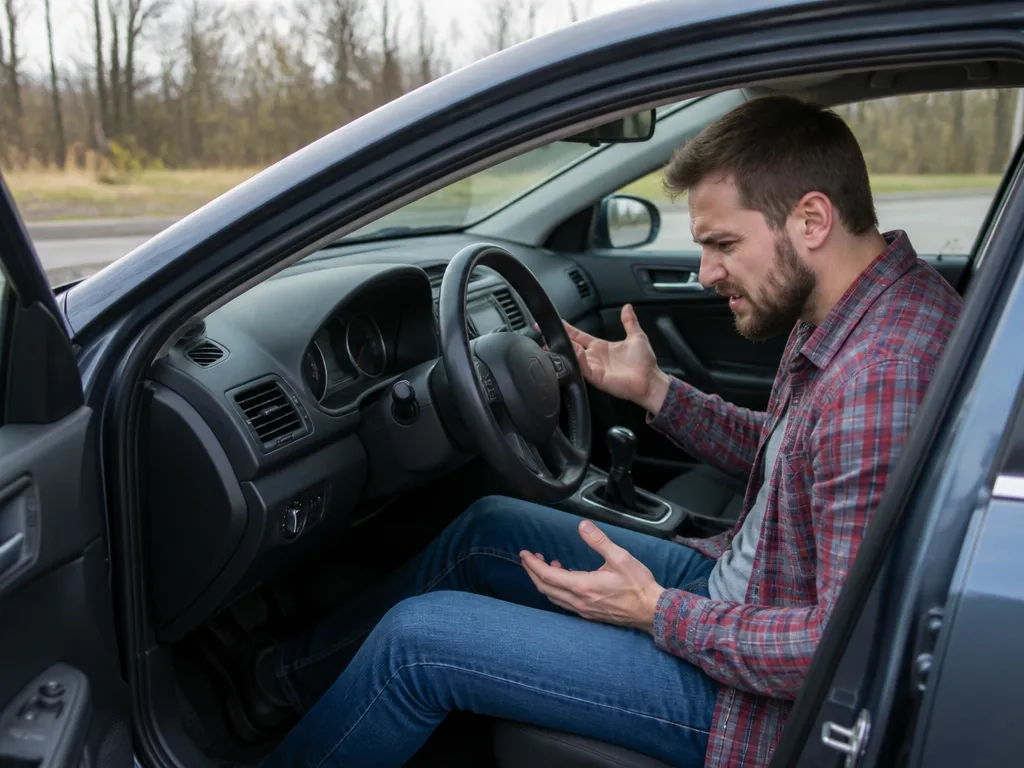
If the shifter moves through the positions but the car stays in Reverse, the shifter may be moving without delivering the correct gear request. On most automatic transmissions, the shifter moves a cable or linkage, which operates a selector and manual valve at the transmission. Electronic systems use a selector input and transmission range sensor to communicate the requested gear. When those parts disagree, the shifter can feel normal while the transmission remains in Reverse.
Separate the problem into two possibilities: a command mismatch or an internal gear-control failure. If the dashboard PRND indicator changes but the car does not, suspect the linkage, range sensor, wiring, or internal shift control. If the indicator also shows the wrong gear, or the car refuses to shift or start normally, the range sensor, interlock inputs, or selector electronics deserve closer attention.
How to Spot Shift Linkage or Cable Problems
A shift cable or linkage can fail while the cabin shifter continues to move normally. The setup usually includes the shifter under the console, a cable or linkage running to the transmission, and a selector that operates the transmission’s manual valve. A stretched cable, worn bushing, broken retaining clip, seized joint, or damaged bracket can leave the transmission in Reverse.
Look for these signs:
- The transmission end moves too little. With the engine off and the vehicle secured, have someone move the shifter while you watch the cable or linkage at the transmission. Limited movement or a noticeable delay points to a mechanical problem.
- The linkage has excessive play. Worn bushings can let the shifter move without reliably moving the transmission selector.
- The cable is disconnected or misrouted. A cable may slip off a bracket, or contact with another component may prevent full travel.
- The indicator and actual gear disagree. Some vehicles use a separate sensor for the dashboard, so the indicator can change even when the transmission selector does not reach the correct position.
Why a Valve Body or Solenoid Can Keep Reverse Applied
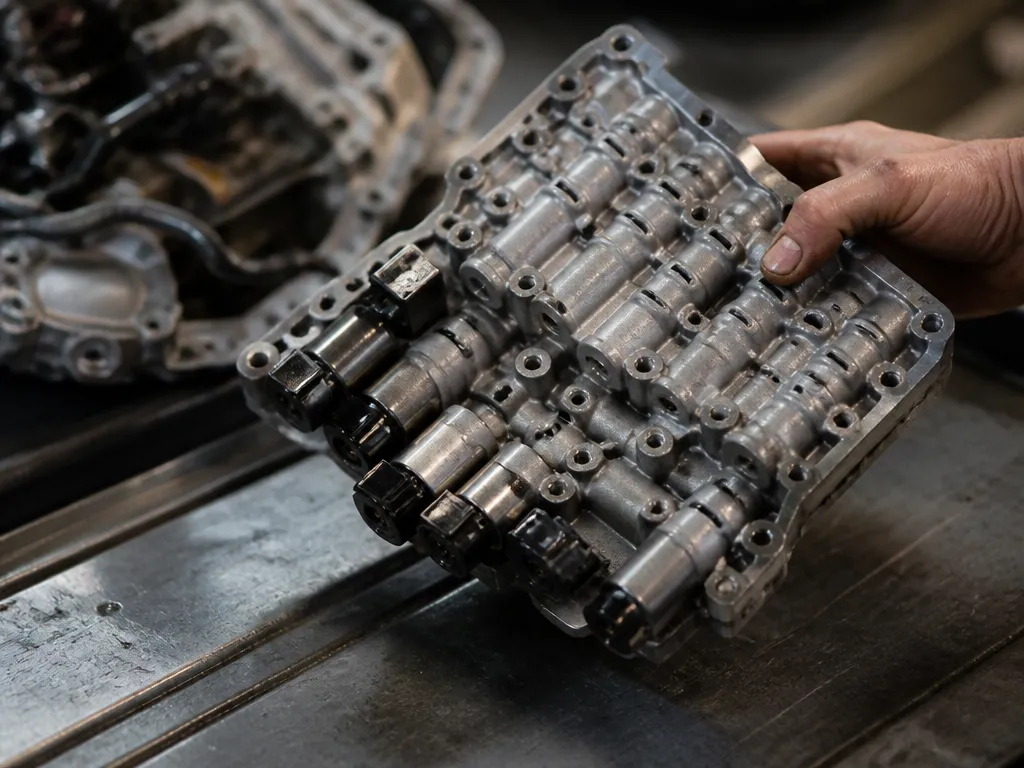
The valve body directs pressurized transmission fluid to the clutches and bands that create each gear. Solenoids control that fluid flow. If a solenoid fails, a valve sticks, debris blocks a passage, or internal wear changes the hydraulic pressure, Reverse can remain applied after the shifter requests Drive.
A solenoid may fail electrically by shorting, opening, or responding too slowly. It can also create a hydraulic fault even when the wiring appears intact. Common symptoms include:
- Reverse remains engaged when you select another gear.
- Reverse engages harshly or with a delay.
- The transmission clunks or repeatedly attempts to shift without completing the change.
Possible repairs include valve body service or replacement, solenoid replacement, and further transmission work if the damage is extensive. This is not usually a simple adjustment, and an internally stuck Reverse gear can make the vehicle lurch when you move the shifter.
Could the Shift Interlock Switch Cause It?
The shift interlock prevents a vehicle from leaving Park, or sometimes entering Reverse, unless conditions such as pressing the brake pedal are met. A faulty interlock can block a shift command, but it usually does not force the transmission to apply Reverse.
Interlock-related symptoms include:
- The shifter moves but the shift command is blocked. The vehicle may not complete the change because the system does not recognize the brake-pedal signal or another required input.
- The vehicle reports the wrong selector state. Some interlock circuits share information with the transmission range sensor and related control inputs.
Starting behavior can help separate an interlock problem from an internal transmission fault. If the car will not start in Park or Neutral, or it will not shift unless you press the brake, check the interlock and its inputs. If Reverse engages as soon as you release the brake even after selecting Drive, focus on the selector, range sensor, wiring, valve body, and solenoids instead.
Diagnose the Transmission Range Sensor and Wiring
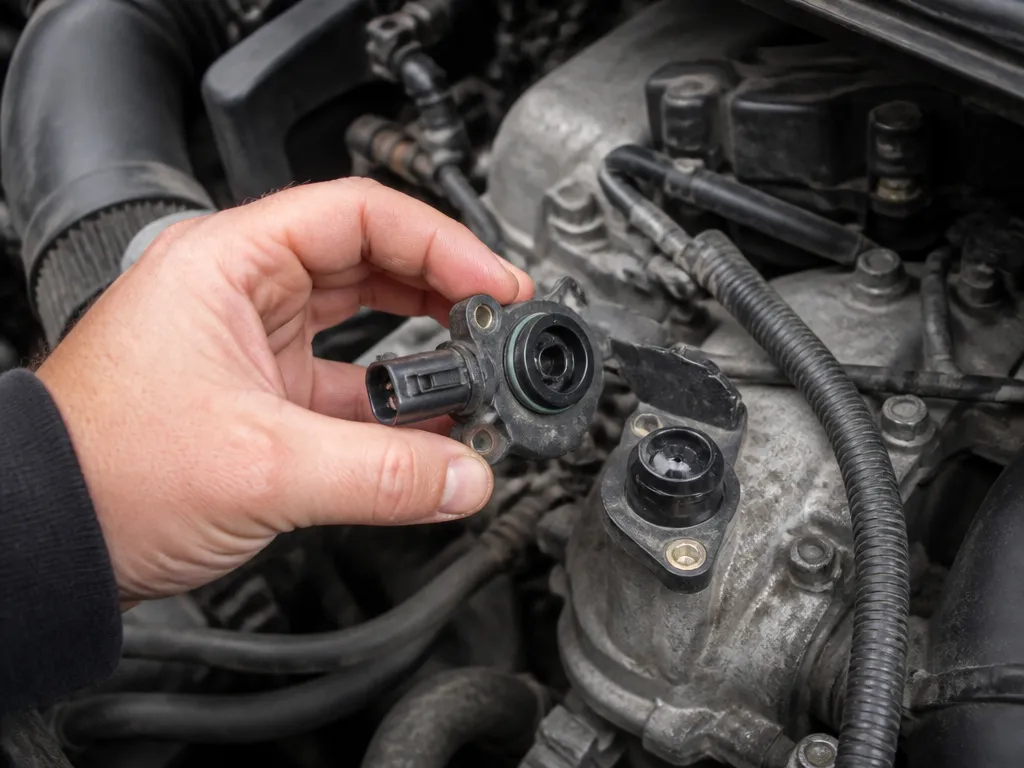
The transmission range sensor reports the selector position to the vehicle’s control modules. Its signal helps control the gear command, shift interlock, dashboard indicator, and starting logic. A bad sensor or damaged wiring can make the car misread the selected gear and respond incorrectly.
Symptoms that point toward the sensor include:
- The dashboard PRND display shows one gear while the transmission behaves as if it is in another.
- The car hesitates to shift or displays gear-related warnings.
- The problem appears or disappears with bumps, moisture, or temperature changes.
Inspect the basics before replacing the sensor:
- Connector condition. Check for loose connections, corrosion, oil contamination, or bent pins.
- Harness routing. Wiring near the exhaust or moving components can wear through and create intermittent faults.
- Sensor adjustment. Some range sensors can be adjusted, and incorrect alignment can produce the wrong gear reading.
Scan the vehicle for transmission and range sensor codes. If a range sensor code appears and Reverse still engages incorrectly, compare the sensor’s live-data reading with the actual shifter position.
Check the Gear Selector for Misalignment
The gear selector is the mechanical link between the cabin shifter and the transmission’s internal control parts. Worn pivot points, bent brackets, damaged stops, or incorrect adjustment can leave the transmission selector in the Reverse range even when the cable itself moves.
Misalignment commonly follows:
- Incorrect shifter adjustment. Previous work on the console or shift module can leave the mechanism out of adjustment.
- Worn bushings or pivot points. The shifter may move through its positions without transferring that movement accurately.
- A bent bracket or damaged stop. Detents and stops establish the reference points for Park, Reverse, Neutral, and Drive. Damage can shift those positions.
With the engine off and the vehicle safely secured, watch the selector movement if the transmission-side arm or manual valve linkage is accessible. Compare the movement for Park, Neutral, and Drive.
Choose the Repair Based on the Failed Link
- The selector does not move correctly when the shifter moves. Repair or replace the shift cable or linkage, replace worn bushings, and correct the transmission-side adjustment.
- The selector moves correctly, but the dashboard gear or vehicle behavior is wrong. Test the transmission range sensor and wiring, then replace the sensor or repair the harness if necessary.
- The selector and sensor signals are correct, but Reverse remains applied. Diagnose the valve body and solenoids, and inspect the fluid for debris or contamination.
Fluid condition can support an internal diagnosis. Burnt fluid, metal flakes, or debris may indicate contamination or wear that is causing a valve to stick. Fluid inspection does not replace proper testing, but it can help distinguish a hydraulic problem from a disconnected cable.
Internal valve body and solenoid work can be labor-intensive, so confirm the fault before approving the repair.
FAQ
Is a car stuck in Reverse while the shifter moves safe to drive?
No. If the transmission applies Reverse when you select Drive or Park, the vehicle can lurch unexpectedly and cause injury or damage. Keep it stationary, hold the brake, and arrange an inspection. If it must be moved, do so only the minimum distance needed to reach a safe location or shop, ideally with the wheels chocked.
What is the cheapest fix for a car that will not shift out of Reverse?
The least expensive repairs are often a linkage or cable adjustment, a replacement cable, a worn bushing, or a loose connector at the transmission. If the selector movement at the transmission does not match the shifter position, start with that mechanical connection.
Can a bad transmission range sensor cause Reverse to stay on?
Yes. A range sensor that reports the wrong gear can cause incorrect shift commands or interfere with shift-interlock logic.
How do I check the linkage or cable without special tools?
Turn the engine off, secure the vehicle, and inspect the cable or linkage at the transmission if it is accessible. Have a helper move the shifter through its positions while you watch the transmission-side selector. No movement, limited movement, excessive play, or binding when selecting Drive or Park points to a linkage, cable, or adjustment problem.
Could the shift interlock switch trap the car in Reverse?
It can prevent shifting under certain conditions, but it usually does not force Reverse to stay applied. If the car will not shift unless the brake is pressed, or it will not start in certain selector positions, the interlock input may be part of the problem. If Reverse engages immediately regardless of the shifter position, focus on selector mismatch, the range sensor, or the internal Reverse-control circuit.

- 10 Best Jack For F250 Super Duty Review (October 2026) - October 12, 2026
- 10 Best Jack For Flat Tire Review (October 2026) - October 12, 2026
- 10 Best Jack For Ford Transit Review (October 2026) - October 12, 2026