Car Wont Go Over 40 Mph: 6 Steps To Fix The Problem

A car that will not go over 40 mph is usually limiting its own power because the powertrain detected a fault or received an incorrect signal. The most common causes are electronic throttle problems, a faulty MAP or MAF sensor, an inaccurate vehicle speed signal, or limp mode. A transmission control fault can create a similar symptom.
Start with a scan for diagnostic trouble codes (DTCs), then use live data to compare commanded throttle with actual throttle position and verify that the vehicle speed reading is accurate. If the speedometer or ECU thinks the car is traveling at the wrong speed, acceleration and shifting can be restricted.
Key Takeaways
- Most common cause: Limp mode triggered by throttle, MAP, MAF, or related sensor faults.
- Check the speed signal: A faulty vehicle speed sensor can mislead the ECU and transmission control module.
- Watch transmission behavior: Some “4th gear only” failures mimic a 40 mph speed cap.
- Confirm the repair: The car should accelerate past 40 mph, and the DTCs should stay cleared.
Why a Car Hits a Hard Limit at 40 MPH
A hard ceiling around 40 mph usually points to limp mode rather than ordinary loss of engine power. The car may feel normal until it reaches a certain speed, then suddenly become sluggish. It may also refuse to downshift, rev higher, or respond normally when you press the accelerator.
Pay attention to when the problem begins. If the car accelerates normally up to 30-40 mph and then loses power, torque reduction or a gear-shift control problem is more likely. If the problem starts immediately from takeoff, suspect a throttle control fault, an air-pressure sensor issue, or a stored DTC that triggers protection as soon as the car starts moving.
Look for other symptoms at the same time:
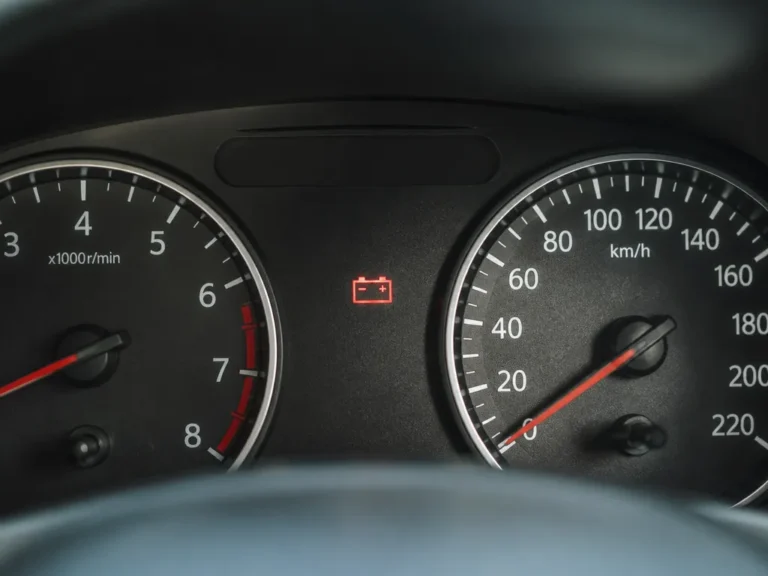
- Check engine light, especially a flashing light
- Reduced or unusual shifting
- Rough running
- Intermittent loss of acceleration
- A speedometer that reads low, jitters, or freezes
A faulty speedometer strongly supports a vehicle speed signal problem. That signal feeds several systems, so an inaccurate reading can push the ECU or transmission controller into a protective state.
How to Separate a Speed Sensor, Throttle, and Transmission Fault
The fastest way to narrow the problem is to compare engine RPM, throttle response, shifting, and the vehicle speed signal. A throttle fault usually causes weak engine response, delayed revs, or an accelerator pedal that does not produce the expected throttle opening. A speed sensor fault can confuse the ECU about road speed and alter shift timing or torque management.
If you floor the accelerator and the engine RPM climbs normally but the car still will not exceed 40 mph, suspect transmission shift control, a driveline torque limit, or incorrect vehicle speed feedback. If the RPM also struggles to climb or feels as if it hits a wall, suspect throttle control, MAP or MAF sensing, ignition, or fuel problems that have triggered protection.
Transmission faults can imitate a speed cap. A failed solenoid, stuck valve, or control module problem may force the transmission into a limited gear strategy. If the car feels as though it stays in one gear range or refuses to downshift when you demand more power, focus on transmission control and the speed or shift signals it relies on.
Can a Throttle Body or MAP Sensor Limit Speed?
Yes. A throttle body or MAP sensor can limit a car to around 40 mph when the ECU detects abnormal airflow or throttle response and reduces engine torque. Modern electronic throttle systems do more than open a plate when you press the accelerator. The ECU commands a throttle angle, then compares the actual position with airflow and pressure readings.
A failing throttle body may cause:
- Reduced accelerator response
- A “stuck” feeling
- Inconsistent throttle behavior
- Rough idle
- Stalling
- A harsh transition when you press the gas
If actual throttle position does not follow the commanded position, the ECU can reduce torque and enter limp mode.
A MAP sensor, or a MAF sensor on vehicles equipped with one, can create a similar limitation. If the ECU sees pressure or airflow values that do not match the expected engine load and throttle command, it may reduce power. Poor acceleration, surging, or weak boost response on a turbocharged car can accompany the problem.
Use live data to separate the two. Throttle faults often show mismatched commanded and actual throttle readings or throttle adaptation errors. MAP faults show implausible load or pressure readings compared with engine RPM and throttle position.
Scan for Limp Mode Codes and Check Live Data
Limp mode commonly appears after the ECU detects a fault and intentionally limits torque. Even with the check engine light off, the car may have pending engine codes or transmission codes that explain the speed restriction.
Prioritize codes related to:
- Throttle control
- Air metering
- Boost control
- Vehicle speed input
- Transmission shifting and solenoids
Codes referring to “throttle position performance,” “electronic throttle control,” “MAP range/performance,” “MAF range,” “vehicle speed sensor,” or transmission shift problems can point you toward the affected system.
Use live data while driving to see what the car is interpreting. Check whether commanded throttle follows actual throttle, whether MAP or MAF readings respond normally during acceleration, and whether the vehicle speed signal remains stable. A speed reading that jumps, freezes, or stays consistently wrong can contribute to a 40 mph limit even when the mechanical parts are fine.
If the scanner reports “limp mode active” or similar wording, the ECU is limiting power. Clearing the codes is not a repair. The underlying fault must be fixed so the car stays out of limp mode after the drive cycle.
Automatic vs. Manual Causes at 40 MPH
Automatic and manual vehicles share many engine-side causes, but automatic transmissions add more possible control faults. The transmission module relies heavily on vehicle speed to determine shift timing, so an incorrect speed signal can affect both shifting and engine torque management.
On an automatic, a 40 mph limit often involves one of these conditions:
- A limited-gear strategy
- An incorrect vehicle speed input
- Torque reduction that prevents normal downshifts or upshifts
If the engine feels held back and the RPM does not increase much, the transmission and ECU may be working together to limit torque.
A manual transmission removes most automatic shift-control problems, but it does not eliminate limp mode. Throttle, MAP, MAF, ignition, and fuel faults can still reduce engine torque. Vehicle speed can also matter if the ECU uses that signal for fueling, EVAP purge strategies, traction control, or shift-assist functions.
If the manual car hits the same limit in every gear, ECU-controlled engine torque reduction is more likely. As a quick check, see whether the engine can rev much higher in a higher gear at low road speed. If it can, the engine is probably capable of producing power and the problem is more likely related to the drivetrain or control system. If the engine refuses to rev beyond a point in the appropriate gear, engine-side limp mode is more likely.
Scanner and Multimeter Tests
Test the system before swapping parts. You need to find out which codes exist, what the ECU is commanding, and whether the key sensor signals are electrically sound.
- Scan for DTCs and freeze-frame data. Pull pending and stored codes from the engine and transmission modules, if equipped. Record the freeze-frame speed and RPM so you can see what “about 40 mph” looked like to the ECU.
- Check throttle tracking in live data. With the engine running, monitor “throttle position – commanded” and “throttle position – actual.” During gentle acceleration, actual position should follow commanded position smoothly. A mismatch points toward the electronic throttle system or its sensors.
- Check MAP or MAF plausibility. Watch MAP or MAF readings while accelerating. On naturally aspirated cars, MAP should rise with engine load. On turbocharged cars, boost-related readings should respond to throttle demand. Readings that stay stuck, spike unrealistically, or conflict with how the car runs point toward a sensor, hose, or intake problem.
- Verify vehicle speed consistency. Compare the live-data vehicle speed with GPS from a phone app while cruising around 30-50 mph. A reading that is significantly wrong or fluctuates wildly points toward the vehicle speed sensor, wiring, or reluctor tone ring.
- Inspect wiring and connectors. Carefully check the throttle body, MAP sensor, speed sensor, and main grounds. Look for corrosion, loose pins, oil contamination, and rubbed-through harness sections. A poor ground can cause intermittent range or performance faults that trigger limp mode.
- Test suspect circuits with a multimeter. Check reference voltage, ground continuity, and signal continuity against the specifications in the service manual. A broken wire, missing ground, or absent reference voltage can explain the limp mode.
Do not improvise voltage tests without a wiring diagram or the correct specifications. A “no signal” speed sensor can produce different readings depending on whether it uses a Hall-effect or reluctor design. Verify continuity and power or ground first, then test the signal using the correct method for that sensor.
Record the results. “Throttle actual stuck at X” or “vehicle speed reads 12 mph at true 45 mph” is far more useful than “it feels slow.”
Repairs That Restore Normal Acceleration and Speedometer Operation
The correct repair depends on the test results. The goal is to remove the fault causing torque reduction, then confirm that throttle and speed readings remain accurate.
If the codes point to the throttle system, start with the simple causes. Clean the throttle body if the vehicle’s service procedure permits it, and use the specified cleaning method so you do not contaminate or damage the sensors. Throttle actuator faults or adaptation errors may require replacement or a proper reset. Afterward, clear the codes and recheck live data during a drive.
If the MAP sensor appears faulty, inspect the vacuum hose, intake connections, and boost plumbing for leaks or cracked lines. A disconnected or leaking hose can produce the same implausible load readings as a failed MAP sensor. After the repair, confirm that MAP readings rise and fall smoothly as throttle and engine load change.
If the vehicle speed sensor is implicated by codes or live data, inspect the sensor and wiring. Check the tone ring or reluctor for damage, depending on the vehicle design. Because the speed signal often feeds several systems, a speedometer fault may be part of the same problem. Once repaired, the speedometer should track actual speed steadily, and the car should accelerate past 40 mph without hitting the same limit.
Confirm the repair with one targeted drive:
- Clear the codes.
- Warm the car fully.
- Test acceleration from 20-45 mph while watching live data.
- Confirm that the engine and transmission no longer request torque reduction.
- Verify that speed and throttle readings remain consistent.
If limp mode returns quickly, the fault remains. An intermittent wiring problem or a sensor that passes a static test but fails under vibration or load is often responsible.
FAQ
Why does my car feel like it hits a hard limit at 40 mph?
A hard limit at a specific speed often indicates limp mode, which reduces engine torque after the ECU detects a fault. Common triggers include an electronic throttle mismatch, MAP or MAF readings that do not match engine load, and an inaccurate vehicle speed signal.
Can a bad speed sensor make the speedometer read wrong and cap acceleration?
Yes. An incorrect vehicle speed signal can affect transmission shift strategy and torque management, causing the car to stop accelerating normally. The speedometer may also freeze, jitter, or read low. Compare live vehicle speed data with GPS while driving to check the signal.
How long should it take to diagnose this with a scanner?
In many cases, you can identify the likely cause in 20-60 minutes by pulling engine and transmission codes and checking live data for throttle tracking and vehicle speed plausibility. Intermittent wiring faults can take longer, especially when the symptom appears only at certain temperatures or engine loads. The diagnosis may also take longer if the problem returns after clearing the codes.
What is the most common mistake when fixing this problem?
The most common mistake is replacing parts based on a guess instead of testing the relevant signals. Inspect the wiring and connectors, review freeze-frame information, and verify the suspected component before installing a replacement.
Is it safe to keep driving if the car will not go past 40 mph?
It may be unsafe if the speed restriction makes it difficult to merge or maintain speed, particularly on highways. Continued driving can also worsen a serious sensor, wiring, or engine problem. Stop driving and have the car checked if it misfires, shakes heavily, or overheats.

- 10 Best Jack For Flat Tire Review (October 2026) - October 12, 2026
- 10 Best Jack For Ford Transit Review (October 2026) - October 12, 2026
- 10 Best Jack For Ford Raptor Review (October 2026) - October 12, 2026