Car Won’t Go Into Gear When Engine Running: Car Won’t Go Into

A car that runs but will not go into Drive, Reverse, or another gear usually has a shifter linkage, clutch-hydraulic, or interlock problem. Some of these faults can make the car unsafe to move. Start with the quickest safe checks below, then narrow the cause by transmission type and shifter behavior.
Featured snippet: A car that won’t go into gear when the engine is running is most often affected by a shifter or linkage adjustment issue, a clutch hydraulic problem, or a neutral safety or shift interlock fault. Start by confirming that the brake is fully pressed in an automatic, move the shifter slowly through its gates, and note any mechanical resistance. If the transmission will not engage with the brake pressed, a switch, sensor, linkage, or failed hydraulic component may be blocking the shift.
Key Takeaways
- Try safe movement first. Keep your foot firmly on the brake in an automatic and shift slowly through all positions.
- Check linkage tightness. A loose or misadjusted cable or rod can prevent the shifter from moving the transmission selector.
- Verify the neutral safety function. A failed neutral safety or shift interlock switch can block shifting while the engine is running.
- Inspect clutch hydraulics. Low fluid, a leaking line, air in the system, or a weak slave cylinder can stop a manual-transmission clutch from fully disengaging.
- Read codes before guessing. Transmission and engine codes can point to interlock, range-sensor, or related wiring faults.
- Know when to stop. If you suspect a hydraulic leak or the car will not move at all, have it diagnosed professionally.
Why a Running Car Won’t Go Into Gear

The fastest diagnosis starts with three questions: Is the car automatic or manual? Does the shifter move normally? Does anything change when you press the brake, use the shift-lock override, or pause while moving the lever?
A shifter that feels stuck, mushy, or unable to reach a gate points toward cable adjustment, broken bushings, or a linkage that is not transferring movement to the transmission. A shifter that moves normally while the transmission refuses to engage points more toward an interlock, sensor, hydraulic, or internal transmission problem.
Use this symptom-to-cause shortcut:
- Automatic, will not shift out of Park or Neutral. Common causes include a shift interlock or neutral safety switch fault, a brake switch that is not registering, or a mismatch between the shifter position and the transmission range sensor.
- Manual, will not shift into gear with the clutch pedal fully down. The clutch may not be disengaging because of low hydraulic fluid, air in the system, a failed slave cylinder, or incorrect pedal adjustment.
- Shifter moves but the gear still does not catch. Possible causes include an automatic interlock fault, manual clutch-hydraulic problem, linkage failure, or an internal transmission fault. External causes are more common and easier to check first.
For this specific symptom, check the likely causes in this order:
- Shift interlock or brake switch on an automatic, or a neutral safety switch signal.
- Shifter cable adjustment or linkage binding.
- Clutch hydraulics on a manual.
- Wiring and connector faults affecting those switches or sensors.
- Internal transmission failure after the external checks pass.
Check the Shifter Cable and Transmission Linkage
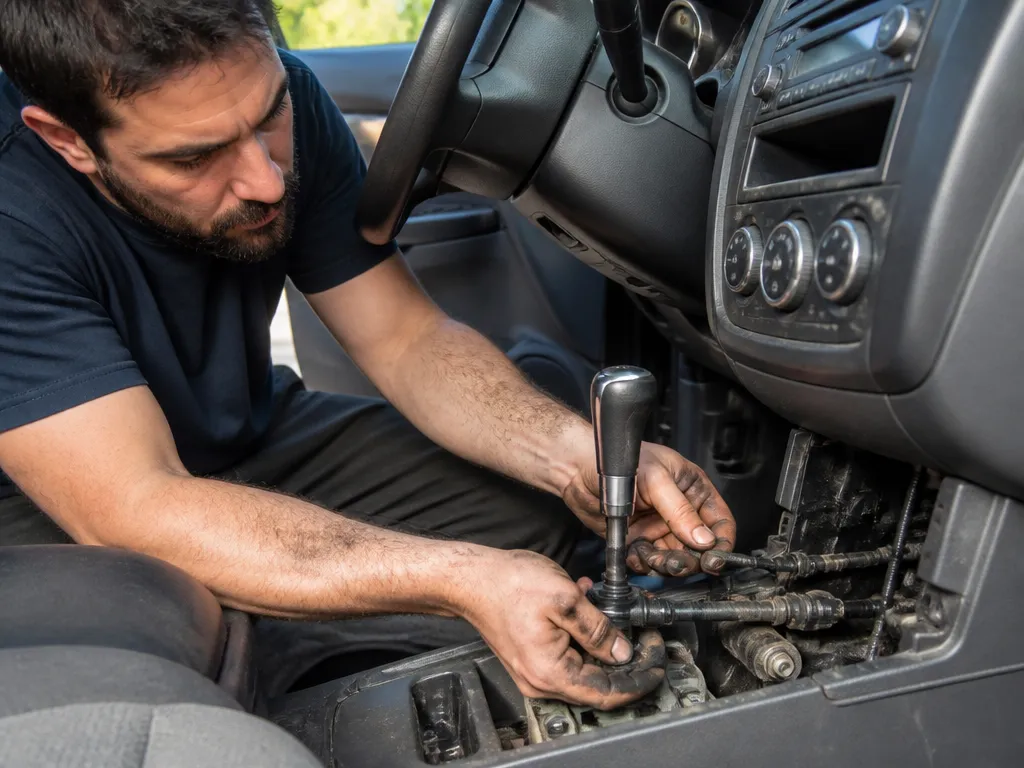
The shifter should move smoothly through its full range, and the selector arm on the transmission should move when the shifter moves. A disconnected cable, broken retaining clip, worn bushing, bent rod, or stretched cable can leave the cabin shifter feeling as if it is in gear while the transmission selector has not traveled far enough.
For cable systems, misadjustment, stretching, or incorrect routing can limit selector movement. For rod-and-linkage systems, worn bushings and bent rods can let the lever reach a gate without moving the transmission selector far enough. Extra play at the shifter, clunks, or inconsistent selector movement support a linkage problem.
Do these checks in order:
- Confirm shifter-gate travel. Move the shifter slowly from Park to Reverse to Neutral and back, noting any dead stops or unusual resistance.
- Inspect under-hood and under-car connectors. Look for loose cable ends, popped retaining clips, or torn boots that may conceal binding.
- Watch the transmission selector. With the engine running or the key on, depending on your safety setup, have someone move the shifter slowly while you verify that the selector arm moves the expected amount.
- Check the cable for binding. Feel for tight spots along the cable sheath. A kinked or rubbing cable can reduce movement.
- Check adjustment hardware. If the vehicle uses an adjustment nut or bolt, make sure it has not backed off and that the cable end is seated correctly.
If you can reach the adjustment point safely, make only small changes and recheck selector movement after each one. Without the correct adjustment specification, stop rather than trying to compensate for a broken or misrouted cable.
A broken clip, frayed cable strand, bent rod, or uneven movement calls for repair or replacement, not a minor adjustment. Do not keep forcing the shifter.
Diagnose the Neutral Safety Switch and Range Signal
The starter interlock and shifting interlock may produce different symptoms, so the engine can start even though the transmission control module is not receiving the correct range signal.
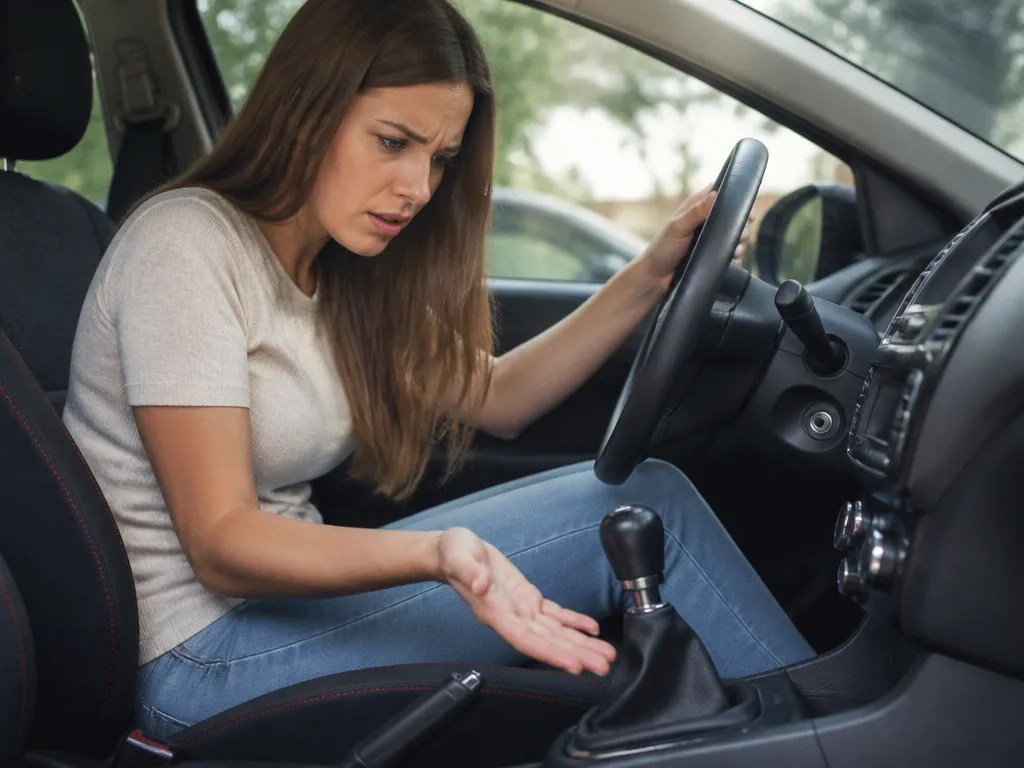
Press the brake fully and try shifting again. If the shifter moves only after a very specific action, the problem may be in the interlock logic or switch input rather than the mechanical linkage.
Many vehicles also have a manual shift-lock override. If the shifter will move when you use the override but not during normal operation, the electrical interlock path becomes the leading suspect. The override is a diagnostic clue, not a permanent repair.
Use this process:
- Confirm the brake-switch input. If the car will not shift unless the brake is pressed, check the brake lights and brake switch.
- Scan for codes first. Transmission or range-sensor codes often accompany neutral safety and shift-interlock faults.
- Inspect the switch and wiring. Unplug and reseat the connector at the neutral safety switch if accessible, then check the pins for corrosion or damage.
- Check the gear-position display. A wrong or flickering dash indicator suggests a range-switch or sensor problem.
- Test electrically if equipped. A multimeter can check continuity and voltage changes as the shifter moves. Without a wiring diagram and a clear test plan, have a shop perform this step.
Heavy connector corrosion or a physically broken switch usually means replacement. Intermittent shifting still requires electrical testing; cleaning a connection and hoping the problem disappears can miss a damaged harness.
Stop and call a professional if:
- Multiple range or interlock sensors appear to be involved.
- The dash gear indicator is clearly inconsistent.
- The connector is melted or the harness is damaged.
- The car cannot be safely put into Drive or Reverse, even after using the approved override procedure.
Check Clutch Fluid, Hydraulic Pressure, and the Slave Cylinder
On a manual transmission, a clutch that does not fully disengage is the first mechanical target. The shifter may fight you, or the gears may refuse to engage unless you force the lever while slowly releasing the clutch. Do not force it. Grinding can damage synchronizers and other transmission parts.
Check the clutch-fluid level and look for leaks. If the vehicle has a clutch reservoir, inspect the level with the system at rest. Then look under the car near the slave cylinder and along the hydraulic lines for dampness, wetness, or fluid residue.
A leaking or weak slave cylinder may leave the clutch pedal feeling normal while still failing to release the clutch fully. Intermittent engagement is another common sign.
Common hydraulic causes include:
- Low fluid from a leak.
- Air in the system, often causing a spongy pedal.
- A failed slave cylinder, with a leak or weak push.
- Blocked or failing master-cylinder or slave-cylinder seals.
Check the system in this order:
- Check fluid level and leaks first. If the fluid is low, locate the leak before bleeding the system.
- Feel the pedal. A spongy pedal suggests air. A pedal that slowly sinks can indicate an internal seal leak.
- Inspect the slave cylinder. Look for cracks, wet boots, and fluid residue.
- Check pushrod adjustment if applicable. Some designs require specific clearance, but do not adjust it randomly.
- Bleed the system only when the fluid level is correct and no leak is present. Bleeding a leaking system only repeats the problem.
If fluid is leaking from the slave cylinder or a hydraulic line, stop trying to drive through the fault. Replace the leaking component or have the repair done. A hydraulic leak can worsen suddenly and leave you unable to disengage the clutch.
Seek expert help if the pedal feels severely abnormal, fluid is appearing on the carpet, or you cannot confidently bleed the system for your vehicle.
Test the Brake Switch and Shift Interlock
Start with the brake lights. Have someone stand behind the vehicle while you press the brake firmly and check all brake lamps. Inconsistent or missing brake lights point to a brake-switch adjustment problem, a failed switch, or related wiring.
Then observe the interlock:
- If the shifter moves only when you press the brake in a very specific way, suspect the brake-switch signal.
- If pressing the brake does nothing for both the shifter and brake lights, check the brake switch first.
- If the brake lights work but the shifter remains locked, investigate the range sensor, neutral safety input, shift-interlock circuit, and related wiring.
Practical checks include:
- Confirm the brake lights. A brake-switch repair is often simpler than diagnosing the interlock module.
- Inspect the brake-switch connector. If accessible, reseat it and check for corrosion or loose pins.
- Check switch adjustment. Some vehicles use a plunger that must sit in the correct position against the pedal.
- Look for a Shift Lock message. The dashboard may identify an unmet interlock condition.
- Use the shift-lock override safely. Follow the owner manual exactly, then continue diagnosing the electrical fault.
A firm brake pedal does not prove that the brake switch works. The interlock depends on an electrical signal, and the switch can fail electrically while pedal pressure feels normal.
Seek expert help if:
- The brake lights work intermittently.
- The brake-switch wiring is damaged.
- The car repeatedly locks you out of shifting and does not return to normal after the basic checks.
Scan for Transmission and Engine Codes
Reading diagnostic codes can prevent you from replacing the wrong part. Even basic scanners may identify a neutral safety input fault, shift-interlock circuit problem, range-sensor mismatch, or clutch-related signal issue.
Use the codes to choose the next test rather than treating them as a diagnosis by themselves. A range-sensor or shift-interlock code points toward the neutral safety switch, sensor circuit, or wiring before cable adjustment. An engine-control code that prevents shifting is less common, but it may direct you toward basic engine drivability checks.
Follow this workflow:
- Scan with the ignition on and engine off, then scan again with the engine on. Some faults appear only under particular operating conditions.
- Record the code numbers and freeze-frame data if the scanner provides them.
- Check related codes together. One root fault can trigger several codes across the transmission and body-control modules.
- Inspect the wiring and connectors tied to those codes. A connector repair may solve what initially looks like a sensor failure.
- Clear the codes and road-test carefully only if the vehicle can shift and move safely. An immediate return of the fault helps confirm the diagnosis.
If the scanner shows live data, watch the gear or range position while moving the shifter. A mismatch between the dash display and the module reading indicates that the transmission control system is receiving incorrect input.
Seek expert help if you cannot safely interpret or clear the codes, or if they indicate an internal transmission fault after the shifter, linkage, and hydraulic systems have been checked.
Know When DIY Checks Stop Making Sense
Several checks are reasonable at home: testing brake lights and inspecting an accessible brake-switch connector on an automatic, or checking clutch fluid, leaks, and pedal feel on a manual. These steps can reveal a clear external fault without opening the transmission.
Avoid opening hydraulic lines, removing transmission components, or forcing the shifter under load. Forcing a stuck gear can damage synchronizers or break linkage parts, turning a switch, cable, or hydraulic problem into a much larger repair.
Use this decision guide:
- DIY is worthwhile when you find a clear external cause, such as a broken clip, loose cable end, obvious wiring corrosion, empty clutch reservoir, or visible leak.
- Shop diagnosis is worthwhile when the shifter linkage moves but the transmission selector does not, electrical codes do not match your tests, or an internal transmission fault is possible.
A careful diagnosis in the right order can prevent unnecessary part replacement. Once the job requires wiring diagrams and electrical testing, or hydraulic bleeding you are not confident performing, let a shop take over.
Stop immediately if:
- You smell burning, see smoke, or notice electrical arcing.
- Brake or clutch fluid is leaking quickly.
- The car moves unpredictably.
- You cannot reliably select Reverse or Drive.
Choose the first test according to transmission type:
- Automatic: Check the brake switch and shift-interlock path first, then the neutral safety or range sensor, followed by the cable and linkage.
- Manual: Check clutch hydraulics first, including fluid, leaks, and the slave cylinder, then inspect linkage and adjustment before scanning codes.
The Fastest Fix Path for a Car That Won’t Shift
A car that will not go into gear with the engine running usually has an input, control, linkage, or clutch-disengagement problem rather than an immediate internal transmission failure.
Damaged linkage, leaking clutch hydraulics, or codes that point beyond the external systems call for shop diagnosis. Match the symptom to the first test instead of replacing parts blindly.
FAQ
Can I drive my car if it won’t go into gear when the engine is running?
Do not drive it while trying to force the shift. If an automatic is stuck in Park or Neutral, you cannot rely on safe engagement. If a manual will not select a gear, forcing the shifter can damage synchronizers. If you cannot shift reliably into Reverse or Drive, stop and diagnose the automatic interlock or switch, or the manual clutch-disengagement system.
How long does it usually take to diagnose this problem?
If brake lights are the cause on an automatic, or clutch fluid and leaks are the cause on a manual, you can often confirm the problem in 10 to 30 minutes. Code scanning and electrical connector testing may take closer to 1 to 2 hours. Suspected internal transmission faults can take longer.
What’s the most common cheap fix for this issue?
A misadjusted or failing brake switch or shift-interlock input is a common inexpensive fix on automatics, especially when shifting out of Park works only intermittently. On manuals, low clutch fluid caused by a small leak or a failing slave cylinder is also common, although the repair cost depends on where the leak is and which component failed.
Why does my car start but won’t shift into gear?
The transmission control system may be blocking the shift because it is not receiving the correct input. Automatics commonly require a brake-switch signal and a valid range or neutral-safety signal. Manuals require the clutch to disengage fully, so low fluid, air, or a weak slave cylinder can prevent gear selection.
Is it safe to keep trying to shift repeatedly?
No. Repeatedly forcing the shifter can break linkage parts if the transmission selector is not moving, or grind the gears and synchronizers if the clutch is not disengaging. If basic checks do not solve the problem, pause and get a diagnosis.

- 10 Best Jack For Ford Transit Review (October 2026) - October 12, 2026
- 10 Best Jack For Ford Raptor Review (October 2026) - October 12, 2026
- 10 Best Jack For Ford Ranger Review (October 2026) - October 12, 2026