Car Temp Over The Middle Bar: 5 Causes & Quick Fixes

A car temperature gauge sitting over the middle bar can mean the engine is running hotter than normal, although a brief, stable rise may be normal. The gauge may rise during hot weather or stop-and-go traffic, but it should stabilize. If it keeps climbing, reaches the red zone, or comes with steam, loss of power, or a hot coolant smell, stop driving and shut the engine off.
Check the coolant level only when the engine is cold. Then look for leaks, blocked radiator airflow, and a cooling fan that fails to turn on. Low coolant, a stuck thermostat, and fan problems are common causes.
Quick Takeaways for a High Temperature Gauge
- How long it stays high matters. If the needle remains above the middle for more than 5-10 minutes, stop guessing and perform basic checks.
- Some variation is normal. City traffic and hot weather can raise coolant temperature, but the needle should level off.
- Low coolant is a common cause. Even a slightly low level can allow air into the system and reduce heat transfer.
- Fan problems show up in traffic. A failed fan motor, relay, control module, or sensor command can keep the radiator from shedding heat.
- A stuck thermostat restricts circulation. If it stays closed, coolant cannot move through the radiator normally.
- Red-zone symptoms require an immediate stop. Steam, loss of power, or a gauge entering the red zone means shut the engine off and let it cool.
Why the Car Temperature Rises Above the Middle Bar
A temperature gauge above the middle bar usually points to a heat-removal problem. The engine is producing heat as usual, but coolant may not be circulating properly, or the radiator may not be getting enough airflow.
The most common causes are low coolant or an air pocket, a thermostat stuck closed, and cooling fans that fail to turn on. Other possibilities include clogged radiator passages, a failing water pump, a weak radiator cap, or a coolant hose that leaks under pressure.
The temperature pattern helps narrow it down:
- Higher in traffic but lower at highway speed: suspect radiator airflow or fan control.
- High at highway speed and still climbing: suspect coolant circulation or a radiator heat-transfer problem.
- High after recent cooling-system work: suspect trapped air, an incomplete bleeding procedure, or a new leak.
- A sudden rise after a pothole, puddle, or road debris: check for hose, radiator, wiring, or fan damage.
Is a Temperature Above the Middle Bar Normal?
It can be normal for the gauge to sit slightly above the middle briefly, especially in hot weather or stop-and-go traffic. Many factory gauges are damped, meaning they smooth temperature changes instead of showing an exact coolant temperature. “Middle” therefore does not represent one fixed temperature on every vehicle.
Use the gauge as a trend indicator. A normal system brings the needle up, settles it, and keeps it relatively steady. A problem is more likely when the gauge continues climbing, stays high for a long stretch, rises suddenly, or fails to return toward its usual position when driving conditions improve.
If the needle is only slightly above the middle, remains stable, and no warning lights appear, drive carefully to a safe place or service facility for diagnosis. If it moves toward the red zone, the fan becomes unusually loud, or the engine loses power, treat the situation as an overheating risk and stop.
What the Temperature Gauge Measures
Most temperature gauges use a coolant temperature sensor, often located in the cylinder head or thermostat housing. The instrument cluster then converts that sensor signal into a needle position and smooths the result.
The gauge is therefore not an exact thermometer. Two vehicles with different actual coolant temperatures can show similar needle positions, and a gauge may change slowly before jumping when the system crosses a programmed threshold.
The useful question is whether the temperature stabilizes. The needle should rise as the engine warms, settle after the thermostat opens, and remain controlled as the radiator and fans remove heat. Sustained high readings deserve attention even when you do not know the exact coolant temperature.
Cooling-System Checks for a High Temperature Reading
Let the engine cool completely before opening the cooling system. Never remove a hot radiator cap or coolant reservoir cap.
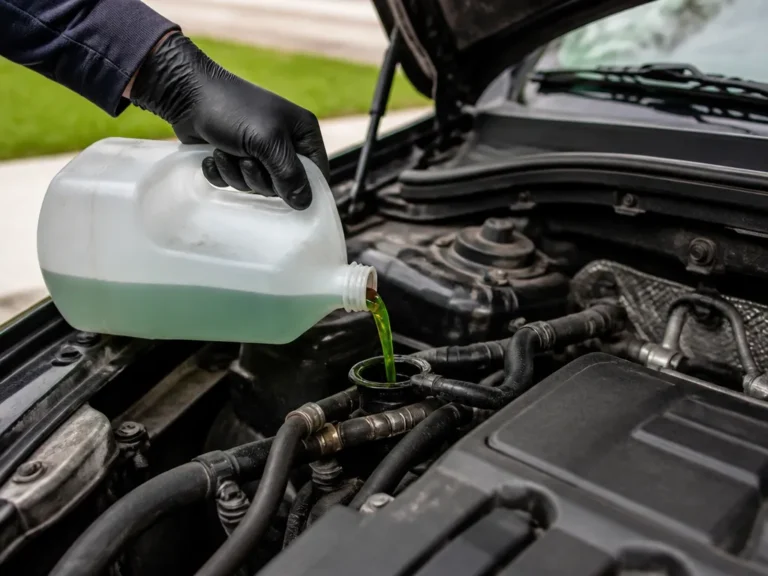
- Check the cold coolant level. Look at the reservoir or overflow tank and use the vehicle’s “MIN” and “MAX” marks. A level below the minimum can allow air pockets and reduce heat transfer.
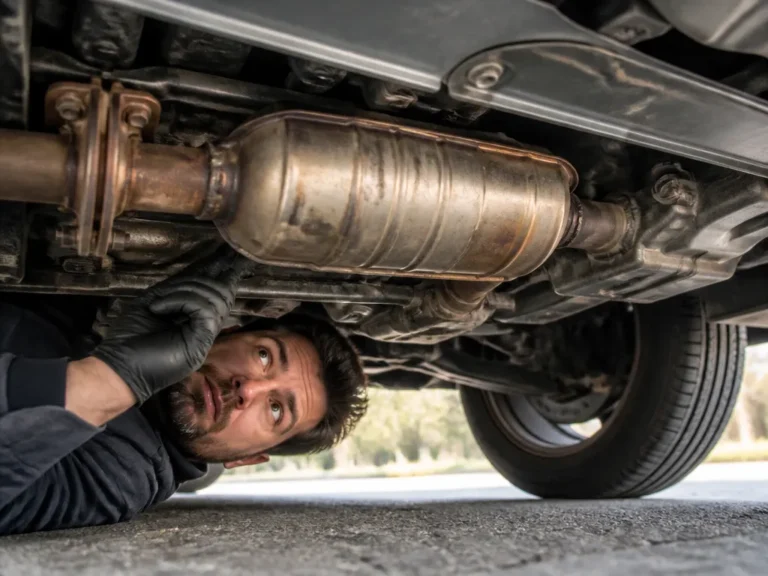
- Look for leaks. Inspect the ground under the front of the vehicle, hose connections, radiator end tanks, and the water pump area. Wetness, crusting, or fresh residue can point to a small leak.
- Inspect the radiator hoses. Look for soft spots, bulges, cracks, or seepage. Confirm that the radiator cap is undamaged and the correct type for the vehicle.
- Check radiator airflow. Bent fins, heavy debris, and packed bugs can restrict airflow even when the cooling fan works.
- Observe fan operation. With the engine safely idling and the temperature elevated, check whether the fan turns on. Keep hands, clothing, and tools away from moving parts.
These checks answer two urgent questions: whether the system is sealed and full, and whether the radiator is receiving enough airflow to reject heat.
Low Coolant and Air Pocket Repairs
Low coolant can leave parts of the engine without consistent coolant coverage. Air pockets make the problem worse because air is compressible and can collect near the cylinder head or thermostat, reducing circulation and heat transfer.
If the level is low, do not simply top it off and assume the problem is fixed. Find out why the coolant dropped. Possible causes include a leaking hose connection, radiator end tank, water pump, or thermostat housing.
The system may also need to be bled. Some vehicles use a bleed screw on the thermostat housing, a bleed hose, or an electronic control procedure. Follow the method specified for your vehicle instead of improvising. Running the engine until the gauge appears normal can leave air trapped inside, allowing the temperature to remain above the middle later.
Air pockets are especially likely after replacing cooling-system parts or draining coolant. Repeated high readings after that work point to incomplete bleeding or a slow leak.
Thermostat, Fan, and Radiator Problems
A thermostat stuck closed can cause the gauge to climb quickly and remain high. Because coolant cannot circulate through the radiator, heat builds inside the engine.
A failed cooling fan creates a similar pattern at low speeds. In traffic, the vehicle relies heavily on the fan to pull air through the radiator. A bad fan motor, relay, control module, or sensor command can leave the gauge above the middle during long stops, then allow it to drop once highway airflow increases.
Radiator restrictions tend to produce a high-and-stays-high pattern. Clogged passages, damaged fins, or blocked airflow reduce cooling capacity even when the vehicle is moving quickly.
Useful checks include:
- Watch for the fan to turn on while the vehicle idles and the gauge sits above the middle.
- Listen for fan engagement. Some vehicles cycle the fan normally, while others run it only at higher temperatures.
- Compare the upper and lower radiator hose temperatures carefully when it is safe to do so. A large difference can point to a thermostat that is not opening or coolant that is not flowing through the radiator properly.
- Use an OBD-II scan tool if available. Its coolant-temperature reading can help confirm whether the engine is genuinely overheating or whether the gauge is mapping the temperature conservatively.
When to Stop Driving Immediately
Stop immediately if the gauge enters the red zone, steam comes from the hood, you smell hot coolant, or coolant disappears suddenly. Continuing to drive can warp engine components, damage the head gasket, or cause severe overheating.
Stop as well if a “check coolant” style warning appears alongside a rapidly rising temperature. If the engine loses power, do not try to limp home. The vehicle may be limiting power to protect the engine, and continued driving can make the damage worse.
When you stop:
- Turn off the engine and move away from traffic.
- Let the cooling system cool completely before checking the coolant level.
- Do not open the radiator cap while it is hot. Even a cap that feels only slightly warm can release boiling coolant under pressure.
When you are unsure whether the engine is overheating, treat it as an overheating incident. A check made before the damage starts is usually far cheaper than an engine repair afterward.
FAQ
Why does my car run hotter in traffic but cool down on the highway?
That pattern usually indicates an airflow or fan-control problem. At highway speed, outside air moves through the radiator and reduces the fan’s workload. If the temperature drops when you accelerate but rises during stops, check the cooling fan, fan relay, control module, and radiator airflow.
Is it safe to drive if the needle is slightly above the middle bar?
It can be safe to drive carefully to a service facility if the needle remains stable and no warning lights appear. Do not continue driving if the gauge keeps climbing, fails to settle, reaches the red zone, or comes with steam or loss of power.
How long should I wait before stopping if my temperature stays high?
If the gauge remains above the middle for more than about 5-10 minutes, perform immediate checks and avoid long trips. If it continues rising or moves toward the red zone, stop right away.
What is the cheapest part that commonly causes this symptom?
Low coolant from a small leak is often the least expensive starting point because topping up the system may restore the level temporarily. The leak source, radiator cap, thermostat, or fan problem can also be relatively inexpensive to repair compared with the engine damage caused by continued overheating.
Could a bad temperature sensor cause a high middle-bar reading?
Yes. An inaccurate coolant temperature sensor can make the gauge read higher than the actual engine temperature. Confirm the coolant level, fan operation, and scan-tool temperature before assuming the sensor is the problem.
What to Do When the Temperature Stays Above the Middle
Use the gauge’s trend, along with warning signs and basic cooling-system checks, to decide whether the vehicle needs immediate attention. Persistent high readings require diagnosis rather than continued driving, especially when the gauge does not return toward its usual position as conditions improve.

- 10 Best Jack For Ford Raptor Review (October 2026) - October 12, 2026
- 10 Best Jack For Ford Ranger Review (October 2026) - October 12, 2026
- 10 Best Jack For F350 Review (October 2026) - October 12, 2026